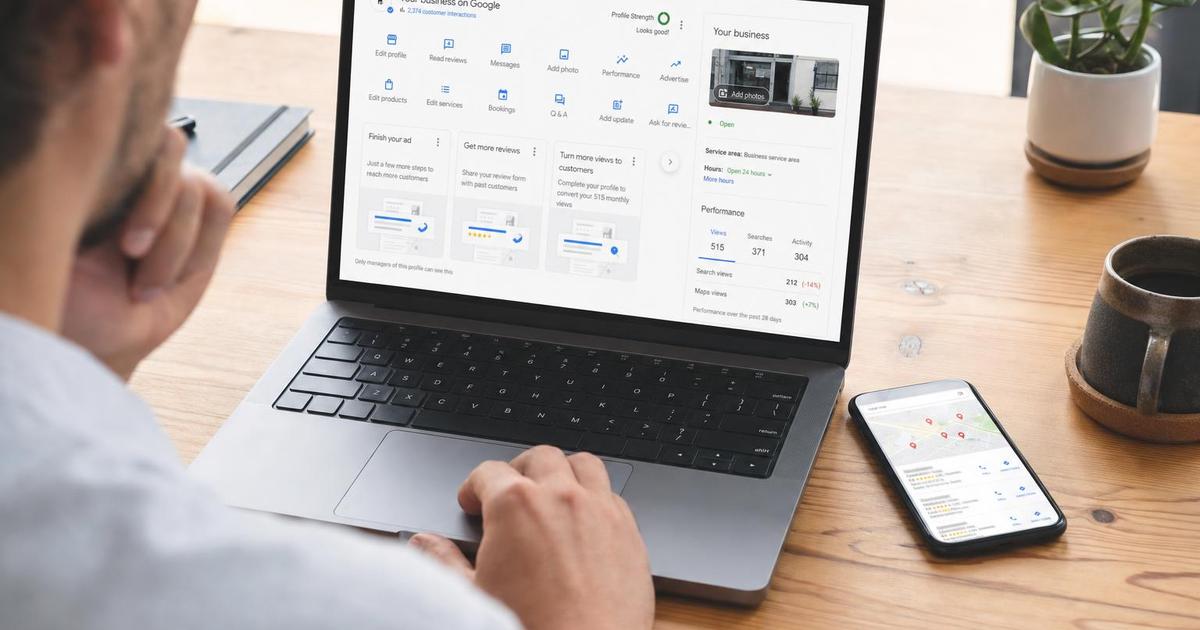
Most small businesses treat "local SEO" and "SEO" as the same thing with a smaller budget. They aren't. Ranking your website on page one is a different fight than showing up in the three map-pinned results Google puts above every organic listing when someone searches "[your service] near me" — and for a business with a physical location or a service area, that second fight is the one that actually fills the calendar.
This guide covers what local SEO is, why the Google Local 3-pack is worth more attention than your organic ranking, how to fix the Google Business Profile (GBP) most small businesses have never touched, why boring citation and NAP consistency work still moves rankings, how reviews factor in, and what changes (and what doesn't) if you're running a business in Canada, the UK, or Australia instead of the US. It also links out to deeper how-to guides for each of those pieces — this is the map, not the full route for any one stop on it.
Key Takeaways
- Only 35% of US small businesses have claimed a Google Business Profile, even though 89% say they invest in some form of local SEO — a real gap between believing it matters and doing the one free thing that matters most.1
- Going from a 3-star to a 5-star average rating increases Local Pack click share by 25 percentage points (44% to 69%) — more than double the equivalent swing in plain organic results.2
- Google Business Profile signals are the single largest category of local ranking factors, ahead of on-page content, reviews, and links, according to a 2025 survey of 47 local-search practitioners.3
- Google handles 93-98% of mobile search in every market Alphalead serves — the US, UK, Australia, and Canada — so local SEO built around Google's local pack isn't a US-only strategy.4
- About 42% of people who run a local search click a result inside the map-based Local Pack rather than scrolling to organic listings below it.5
In this guide:
- What local SEO actually is
- Why local SEO matters (the data)
- The Google Local 3-pack
- Google Business Profile optimization
- Citations and NAP consistency
- How reviews affect local rankings
- Local SEO by region: US, Canada, UK, Australia
- Local SEO vs. national SEO
- DIY vs. hiring it out
- FAQ
What Local SEO Actually Is (and How It's Different From "Regular" SEO)
Local SEO is the practice of optimizing a business's online presence so it shows up when people nearby search for what it sells — "plumber near me," "best coffee shop [city]," "dentist open now." It runs on a different ranking system than standard organic SEO: Google layers in a business's proximity to the searcher, its Google Business Profile completeness, and its review signals on top of the usual content and authority signals that decide who ranks on the open web.
That distinction matters because it changes where the effort should go. A business chasing organic-only SEO spends its time on blog content and backlinks. A business chasing local SEO spends real time on a free Google listing, consistent business information across directories, and the review pipeline — work that has almost nothing to do with what most people think of as "SEO" and everything to do with a handful of specific, learnable tasks covered section by section below.
Local SEO applies to any business with a physical location customers visit or a defined service area — contractors, clinics, salons, restaurants, retail, and professional services. If a business has no local footprint at all (a fully remote SaaS company, for instance), this guide isn't the right playbook; see local SEO vs. national SEO below for how to tell which situation you're actually in.
Why Local SEO Matters: What the Data Actually Shows
Here's the uncomfortable finding first: most small businesses already believe local SEO matters, and most still haven't done the one free thing that matters most. In BrightLocal's 2025 SMB Marketing Report, 89% of surveyed US small business owners said they invest in some form of local or organic SEO — but only 35% have actually claimed their Google Business Profile, and only 29% believe local SEO has "high impact" on their business (BrightLocal, SMB Marketing Report 2025, published Aug 7, 2025, n=778 US SMB owners/managers).1 That's not a small gap. It's most of the market agreeing local visibility matters while skipping the single highest-leverage, zero-cost step available to them.
The reason that gap is expensive is that local search intent is close to purchase intent. Someone typing "[service] near me" or "[business type] open now" isn't researching — they're deciding who to call in the next few minutes. Missing from that result set doesn't cost a page view; it costs the phone call going to whichever competitor did claim their listing. That's also why local SEO pairs so directly with the rest of a small business's growth stack rather than sitting off to the side of it — see the small business lead generation playbook for how local visibility fits alongside paid ads and website conversion work in a full acquisition strategy.
The Google Local 3-Pack: The Real Estate Worth Fighting For
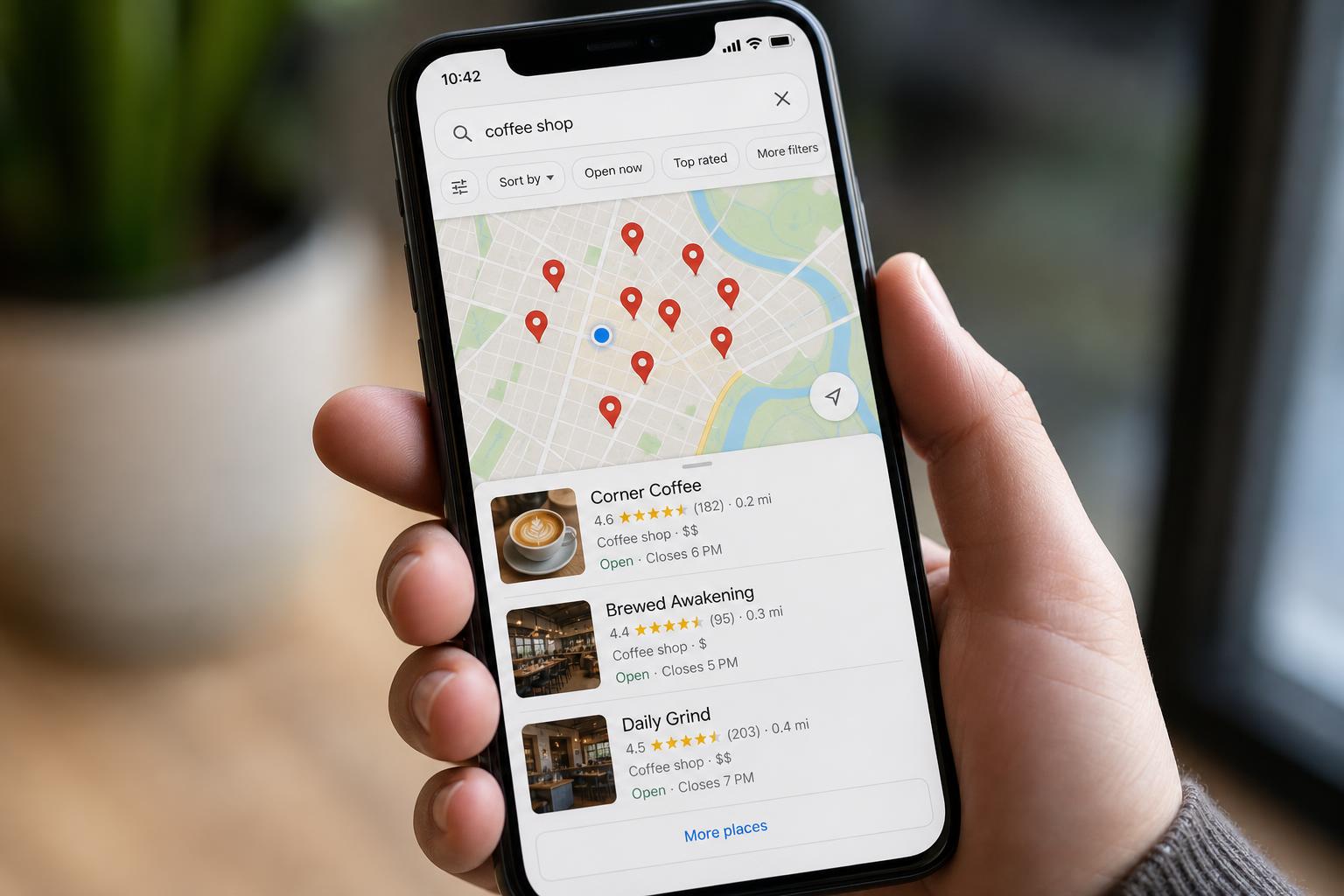
The Local 3-pack (also called the "map pack" or "local pack") is the block of three business listings — each with a map pin, star rating, and click-to-call button — that Google shows above the standard organic results for local-intent searches. It's the first thing most searchers see, and it behaves nothing like organic ranking: no backlink profile or blog content gets a business into it. Proximity, Google Business Profile signals, and review data decide who's in the three slots.
That prominence translates into real click share. About 42% of people performing a local search click through to a result inside the Local Pack rather than scrolling past it to organic listings (Backlinko, Local SEO Statistics, last updated Dec 22, 2025).5 And within the Local Pack specifically, star rating swings clicks far more aggressively than it does in organic results: going from a 3-star to a 5-star average rating lifts Local Pack click share from 44% to 69% — a 25-point jump — compared to a much smaller 11%-to-19% swing across the same rating range in organic results below it (BrightLocal, Review Search Click-Through Study, published Apr 25, 2017, n=6,283 North American consumers via controlled mock-SERP methodology).2 That study is dated, and no comparably rigorous replacement has replicated it since — treat the exact figures as directional, not current-to-the-week, but the underlying mechanism (reviews matter more inside the map pack than outside it) hasn't had a reason to reverse.
We cover the specific, current tactics that move a listing into those three slots in a dedicated guide — see what actually moves you into the Google Local 3-pack for the full mechanics.
Google Business Profile Optimization: The Foundation
Google Business Profile (GBP) is the free listing that powers everything above: your Local Pack eligibility, your Google Maps pin, and the info panel that shows up when someone searches your business name directly. It's also, per the say-do gap above, the thing most small businesses haven't actually claimed, let alone optimized.
GBP isn't one signal — it's a category. In Whitespark's 2025 survey of 47 local-search practitioners scoring 187 individual ranking factors, Google Business Profile signals came out as the single largest category of local ranking factors, ahead of on-page website content, review signals, link signals, and behavioral/citation signals — with primary category selection specifically standing out as the single highest-weighted individual factor in the whole study (Whitespark, 2026 Local Search Ranking Factors Report, published Nov 6, 2025).3 In plain terms: before touching a citation directory or chasing a review, the profile itself — the category chosen, the completeness of the listing, the photos, the posts — is the highest-leverage lever available.
That's also the piece of this whole topic Alphalead has the most direct, repeated experience with. Managing and optimizing Google Business Profiles for local and home-service clients — correcting category selection, filling out service areas, building out photo libraries, and tracking how those changes move Local Pack position over time — is hands-on execution work, not theory pulled from someone else's blog post. The checklist version of everything that goes into a profile worth ranking — categories, services, attributes, Q&A, posting cadence — is broken out in full in the Google Business Profile optimization checklist for 2026.
One place that hands-on work shows up concretely: how often a profile's ranking position actually gets checked and acted on. Alphalead's own service tiers scale that cadence deliberately rather than treating it as a one-time setup task — Starter-tier clients get their GBP reviewed and updated monthly, Growth-tier clients get profile SEO optimization and post updates on a bi-weekly rank-tracking cycle, and Ultimate-tier clients get full profile management (posting and review replies included) on weekly rank tracking plus call tracking (Alphalead, pricing page).6 A profile that's checked once and left alone drifts — categories go stale, competitors add posts and photos, and the "set it and forget it" version of GBP optimization quietly loses ground to whoever's actually paying attention on a schedule.
Citations and NAP Consistency: The Boring Work That Still Counts
A citation is any online mention of a business's name, address, and phone number (NAP) — on directories like Yelp, Apple Maps, Bing Places, industry-specific directories, and chamber-of-commerce or local association sites. NAP consistency means that information matches exactly, character for character, everywhere it appears.
This is genuinely unglamorous work, and it's tempting to skip it in favor of more visible tasks like posting to social media or writing blog content. Independent research specifically quantifying citation-inconsistency's ranking penalty is thinner than it should be for how often the claim gets repeated — several of the precise numbers ("X% ranking drop," "X% of businesses have errors") that circulate in local SEO content don't trace back to a named, disclosed study, so this guide won't repeat them. What's better established, and confirmed directly in Whitespark's 2025 ranking-factor survey above, is that citation and consistency signals remain part of the recognized ranking-factor set local-search practitioners weight when scoring a business's local visibility, even if they carry less individual weight than GBP, on-page, and review signals.3 The practical read: citation cleanup is real, worthwhile maintenance work — not because one wrong phone number tanks a ranking overnight, but because Google's local algorithm is partly a trust exercise, and inconsistent information across the web is a trust signal working against you, not for you.
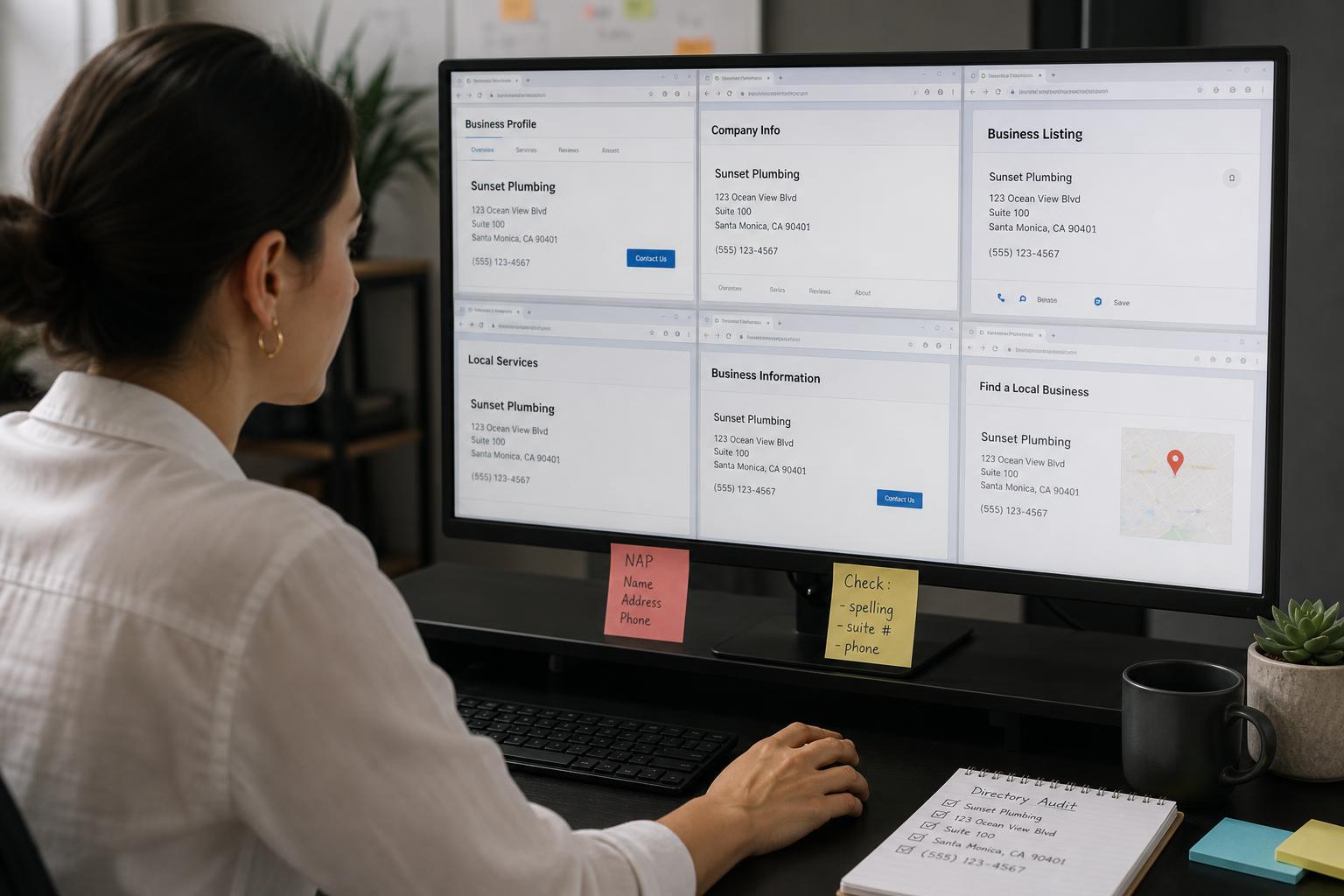
The fix is mechanical rather than clever: pick one exact format for your business name, address, and phone number, use it everywhere, and audit the major directories (Google, Bing, Apple Maps, Yelp, Facebook, and any industry-specific ones relevant to your business) on a recurring basis rather than once. A moved office, a new area code, or a rebrand is exactly when citations quietly drift out of sync — worth a deliberate check any time one of those happens, not just at initial setup.
How Reviews Affect Local Rankings (and Conversions)
Reviews do double duty: they're a ranking input and a conversion lever, and the data above on star ratings and Local Pack clicks already makes the conversion case. The ranking case is reinforced by consumer behavior around review recency and response. In BrightLocal's 2025 Local Consumer Review Survey, 96% of consumers said they're open to writing a review for a local business, but only around 29% actually follow through — a gap that puts the responsibility for review volume squarely on the business asking, not on customer willingness. Consumers also expect a response: 63% expect a reply to their review within 2 to 7 days, and only about 20% still consider a review impactful once it's roughly two weeks old, down from 27% the year before (BrightLocal, Local Consumer Review Survey 2025, published Jan 29, 2025, n=1,026 US adult consumers).7

That recency window means a review strategy built around a one-time push — asking every customer for a review during a single launch month, then stopping — decays fast. A steady, ongoing ask (after every job, every visit, every completed order) does more for both rankings and the trust signal a searcher sees than a single burst ever will, however large. For the deeper data on review count, velocity, and rating thresholds specifically, see how reviews affect local rankings.
Local SEO by Region: What Changes (and What Doesn't)
Local SEO's core mechanics — GBP, citations, reviews, the Local Pack — work the same way in the US, Canada, the UK, and Australia, because they all run on the same Google infrastructure. What changes by region is the competitive landscape, the directory ecosystem, and a handful of country-specific details. That's worth stating plainly because most local SEO content defaults to US-only framing and just assumes the rest translates — it mostly does, but "mostly" is where the region-specific spokes below earn their keep.
Google's dominance as the search engine local searches run through is close to universal across all four markets Alphalead serves: Google holds 93.31% of mobile search share in the US, 97.62% in the UK, 97.4% in Australia, and 95.75% in Canada (StatCounter Global Stats, mobile search engine market share by country, accessed Aug 2026).4 In other words, a Google-first local SEO strategy isn't a US default applied elsewhere out of convenience — it's the correct strategy in each of these markets independently, because there's effectively no meaningful alternative search engine to also optimize for.
What genuinely differs by market is more granular than the search engine question: which directories carry local citation weight (Yell and Thomson Local in the UK, for instance, versus Yelp's heavier US footprint), how service-area businesses without a storefront should structure their GBP listing under each country's local norms, currency and regulatory references that need to be market-correct rather than translated, and which review platforms carry the most local trust in each market. Those details are exactly what this pillar's regional spokes exist to cover in full rather than as a paragraph each here — see local SEO for small business in Canada, local SEO for small business in the UK, and local SEO for small business in Australia for the market-specific playbooks.
Local SEO vs. National SEO: Which One Do You Actually Need?
A quick gut check, since conflating the two wastes budget either direction: if customers have to be physically near you or within your service area to buy from you — a clinic, a contractor, a restaurant, a retail store — local SEO is the priority, and organic content SEO is a supporting layer at best. If your business sells to anyone regardless of location — an e-commerce brand shipping nationally, a SaaS product, a fully remote service — national or organic SEO is the right lane, and local SEO tactics like GBP optimization won't move the needle because there's no "near me" intent to capture in the first place. Most small businesses know which bucket they're in instantly once it's framed this way; the confusion usually comes from agencies selling one when a business actually needs the other. For the full decision framework — including multi-location and franchise businesses that genuinely need both at once — see local SEO vs. national SEO: which does your business need.
DIY Local SEO vs. Hiring It Out
Everything covered above — claiming and optimizing a GBP listing, cleaning up citations, and building a review pipeline — is genuinely doable without an agency, especially for a single-location business just getting started. The GBP and citation checklists linked throughout this guide are written to be followed directly, not just read.
Where DIY starts costing more than it saves is the same place it costs more in branding and paid media: once there's real revenue and real competition on the line, the ongoing maintenance — rank tracking, review response cadence, keeping citations in sync after any business change, competitor monitoring — becomes a second job most owners don't have time for on top of running the business itself. That's the exact gap Alphalead's local SEO and GBP management work is built to close, and it's priced by the same stage-based logic as the rest of Alphalead's services rather than a flat "SEO retainer" that doesn't scale with what a business actually needs:
| Tier | SEO / AIO rank tracking | Google Business Profile tracking | GBP profile management |
|---|---|---|---|
| Starter | Monthly | Monthly | Review & update, monthly |
| Growth | Bi-weekly | Bi-weekly | SEO optimization + post updates |
| Ultimate | Weekly + competitor tracking | Weekly + call tracking | Full management, posts + review replies |
That table is a direct pull from Alphalead's own pricing page, not a rounded-off summary — the actual difference between tiers is rank-tracking frequency and how much of the GBP is actively managed versus just reviewed, which is the same distinction covered in the GBP optimization section above between a profile checked once and one maintained on a schedule.6 If your business is past the DIY stage and ready to have someone else own the rank tracking, the citation audits, and the review cadence — not just set it up once and disappear — see current plans and request one, or get in touch to talk through which tier actually fits where your business is right now.
Frequently Asked Questions
How long does local SEO take to show results?
There's no universal timeline, since it depends heavily on how much competition exists in a given city and category and how far behind a business is starting (an unclaimed GBP with zero reviews takes longer than a claimed-but-neglected one). Claiming and optimizing a GBP listing can start influencing visibility within weeks; building enough review volume and citation consistency to meaningfully move Local Pack position typically takes a few months of consistent work, not a one-time setup.
Is a Google Business Profile actually free?
Yes. Claiming, verifying, and fully optimizing a Google Business Profile costs nothing beyond the time it takes — which is exactly why the 35%-claimed figure cited earlier in this guide is such a striking gap.1 The cost most businesses actually pay is in ongoing management time, not the listing itself.
Do I need a physical storefront to rank in the Local Pack?
No. Service-area businesses (plumbers, cleaners, mobile services) can rank in the Local Pack using a service-area GBP setup that hides the exact address while still targeting the neighborhoods and cities served. The setup differs slightly from a storefront listing — covered in the Google Business Profile optimization checklist.
Does local SEO work differently in Canada, the UK, or Australia than in the US?
The core mechanics — GBP, citations, reviews, the Local Pack — are the same everywhere, since Google runs all four markets on the same system and holds a similarly dominant mobile search share in each one.4 What changes is the local directory landscape, currency and regulatory references, and which review platforms carry local trust — see the region-specific guides linked above for Canada and the UK.
Should I do local SEO myself or hire someone?
For a single-location business just getting started, DIY is a reasonable starting point — the checklists linked throughout this guide are built to be followed directly. Once there's real ad spend or revenue riding on visibility, the ongoing maintenance (rank tracking, review response, citation upkeep, competitor monitoring) tends to outgrow what an owner can sustain alongside running the business, which is where a managed service like Alphalead's local SEO and GBP management earns its cost back.
Key Takeaways and Next Steps
Local SEO isn't a smaller version of regular SEO — it runs on its own ranking system built around your Google Business Profile, your citation consistency, and your reviews, with the Local Pack as the prize worth fighting for. Most of the leverage sits in free, doable-yourself work that most small businesses simply haven't done yet, which is the real opportunity buried in that 89%-vs-35% gap at the top of this guide.
This is the first post in a growing series on local and organic visibility for small business. So far it also includes what actually moves you into the Google Local 3-pack, the Google Business Profile optimization checklist for 2026, local SEO for small business in Canada, local SEO for small business in the UK, local SEO for small business in Australia, how reviews affect local rankings, local SEO vs. national SEO: which does your business need, and a real, sourced local 3-pack case study. Subscribe below to get each new one as it publishes, or get in touch if you'd rather talk through your specific GBP and local rankings together.
Want more like this in your inbox?
Occasional, practical marketing advice for local service businesses. No spam.
References (7)
- 1.BrightLocal — SMB Marketing Report 2025, n=778 US SMB owners/managers, published Aug 7, 2025
- 2.BrightLocal — Review Search Click-Through Study, n=6,283 North American consumers (72% US / 28% Canada), controlled mock-SERP methodology, published Apr 25, 2017
- 3.Whitespark — 2026 Local Search Ranking Factors Report, 47 local-search practitioners scoring 187 ranking factors, published Nov 6, 2025
- 4.StatCounter Global Stats — Mobile search engine market share by country (US, UK, Australia, Canada), accessed Aug 2026
- 5.Backlinko — Local SEO Statistics, last updated Dec 22, 2025
- 6.Alphalead — Pricing and plan comparison page, confirmed against src/components/PricingComparison.tsx
- 7.BrightLocal — Local Consumer Review Survey 2025, n=1,026 US adult consumers, published Jan 29, 2025

Written by
Yash · Creative Specialist
Builds the creative and content that gets your business noticed.