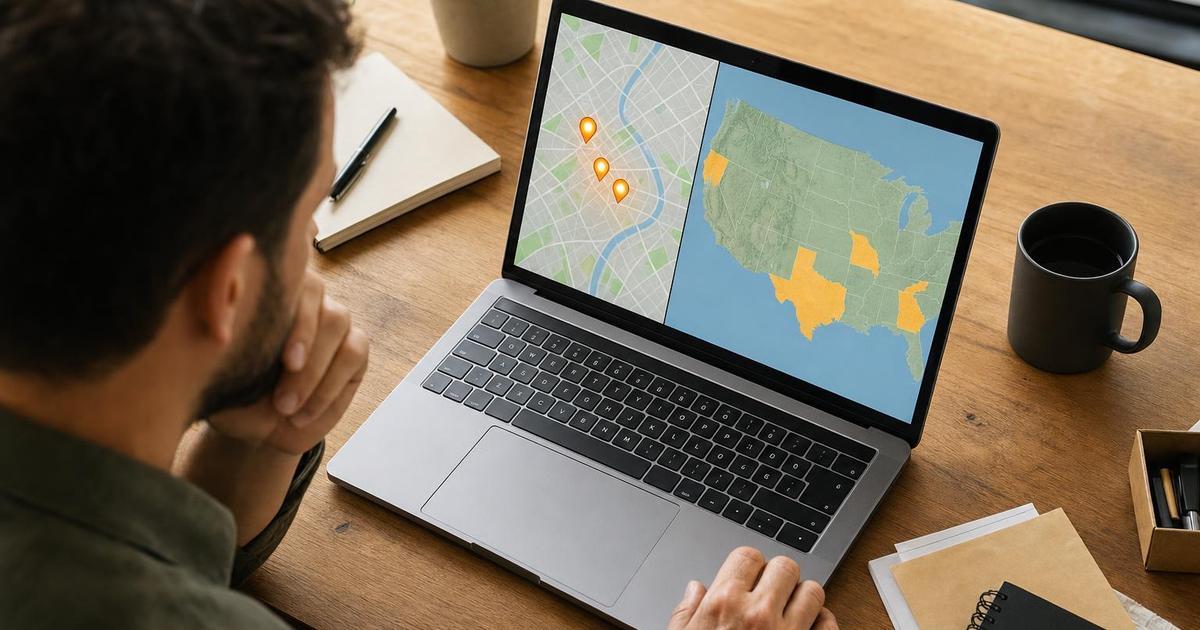
If customers have to be physically near you to buy from you, local SEO is your priority and national SEO is a supporting layer at best. If your business sells to anyone regardless of location, national (organic) SEO is the right lane, and local tactics like Google Business Profile optimization won't move a needle that doesn't exist. Most businesses know which bucket they're in once it's framed this way — confusion usually comes from budget going to the wrong one, or a business that genuinely needs both only ever paying for one.
Key Takeaways
- Local rankings run on relevance, distance, and prominence; national/organic rankings run on meaning, relevance, content quality, usability, and context — two different ranking systems, per Google's own documentation for each.1,2
- Google Business Profile signals make up roughly 32% of what determines Local Pack rankings — a category that barely factors into national organic rankings at all.3
- Mobile searches for "near me today" or "near me tonight" grew more than 900% in two years in Google's own historical data — the shift that made "near me" a distinct intent worth optimizing for.4
- About 42% of people running a local search click a result inside the Local Pack instead of scrolling to organic listings below it — real estate national SEO can't touch.5
- Local SEO providers charge $1,557/month on average versus $3,473.74/month for providers serving nationwide clients — a real budget signal, not just a strategic one.6
In this guide:
- What each one actually optimizes for
- Four signals that tell you which one you need
- Why the Local Pack runs on different rules
- The decision table
- When you genuinely need both
- What each one costs
- FAQ
What Local SEO and National SEO Actually Optimize For
Local SEO optimizes for one piece of real estate: the map-pinned Local Pack Google shows above organic results for local-intent searches. Google names the deciding factors directly — relevance (how well a Business Profile matches the search), distance (proximity to the searcher), and prominence (reviews, links, mentions).1 None of that requires blog content or a backlink strategy.
National SEO — what most people just call "SEO" — optimizes for standard organic results with no location filter. Google's own explanation of organic ranking names five signals instead: meaning (query intent), relevance (keyword and topical match), quality (expertise, authoritativeness, trustworthiness), usability (mobile-friendliness, speed), and context (location and history, applied more subtly than local's hard distance factor).2
In short: local SEO is largely a profile, review, and proximity exercise. National SEO is largely a content and authority exercise. They overlap at the edges, but the primary lever in each is different enough that treating them as one skill is where most businesses waste budget.
Four Signals That Tell You Which One Your Business Needs
Run your business against these four signals instead of guessing. Most businesses land clearly on one side after the first two.
- Business model. Does a customer have to be near you, or in your service area, to buy from you? A plumber, dentist, salon, or contractor only serves people who can reach them — local SEO first. An e-commerce brand, a SaaS product, or a fully remote service serves anyone, anywhere — national SEO first, since no amount of profile polish sells a subscription to someone in another state.
- What customers actually type. Do people search "[service] near me," "[service] in [city]," or "[business] open now" — or broad category terms like "best project management software" with no location attached? Near-me and city-modified searches are local intent; unmodified category searches are national intent, and they're the majority of queries for a business with no location constraint.
- How many addresses you have. One location or one clearly defined service area keeps local SEO simple — one profile, one citation set, one review pipeline. Multiple locations is still local SEO, just multiplied, usually needing its own profile and page per site. Once a business no longer maps to a finite list of addresses — an online retailer, a nationally-marketed product line — national SEO takes over as the primary strategy.
- Budget reality. Local SEO is genuinely cheaper to execute well, since its factors are more procedural (profile completeness, category accuracy, review cadence) than they are creative or research-intensive. National SEO's core levers — sustained content, link building, topical authority — cost more to build. The pricing data below puts a real number on that gap.
Why the Local Pack Runs on Different Rules Than Organic Search
The clearest evidence these are two separate systems is how differently they weight the same signals. In Whitespark's 2026 survey of 47 local-search practitioners scoring 187 factors, Google Business Profile signals were the single largest category driving Local Pack rankings at roughly 32%, ahead of reviews (20%), on-page SEO (19%), and links (15%).3 A free, unpaid listing outweighs your own website's content in deciding whether you show up in the map pack.
National organic rankings invert that. Google's "How Search Works" documentation doesn't mention a free business listing at all — it's built around meaning, relevance, quality (E-E-A-T), usability, and context, weighted by query rather than one fixed asset.2 A business with a flawless profile and no real content or backlink authority will still struggle to rank nationally for a competitive term, because national rankings were never looking for a map pin.
That distinction matters because local intent converts fast once found. Google's own historical data found mobile queries for "near me today/tonight" grew over 900% in two years — evidence near-me intent is someone deciding who to call in the next few minutes, not browsing.4 That data is several years old, but it's the foundational shift that made near-me search worth its own ranking system, and the urgency hasn't reversed since. It's also why the Local Pack earns its placement: about 42% of local searchers click a result inside it rather than an organic listing below — real estate a national-only strategy can't reach.5
The Decision Table: Local, National, or Both
| Business Signal | What It Looks Like | Verdict |
|---|---|---|
| Single-location service business | Plumber, dentist, salon, restaurant — customers must visit or be in your service area | Local SEO first |
| Regional service-area business | Contractor or cleaning company covering several nearby cities from one base | Local SEO, scaled across each service area |
| Multi-location chain (3-50+ locations) | Regional retail chain, multi-clinic healthcare group | Both — a profile and local presence per location, plus national domain authority |
| E-commerce brand | Ships product nationally or internationally, no storefront customers visit | National SEO first |
| SaaS or fully remote service | No physical location tied to service delivery | National SEO first |
| National brand with local franchise locations | Franchise or dealer network with a corporate site and individual local outlets | Both — corporate national SEO plus per-location local SEO |
When Your Business Genuinely Needs Both
Multi-location and franchise businesses are the clearest case where local and national SEO run at once, not sequentially. A regional healthcare group with 12 clinics needs each clinic to independently win its own Local Pack — its own profile, reviews, and proximity to nearby patients — while the parent brand needs enough domain-wide authority to rank nationally for category terms. Skip either half and visibility is left on the table: local-only leaves the corporate domain with no organic footing outside the map pack, and national-only means competitors with claimed profiles win the map pack in every city you operate in.
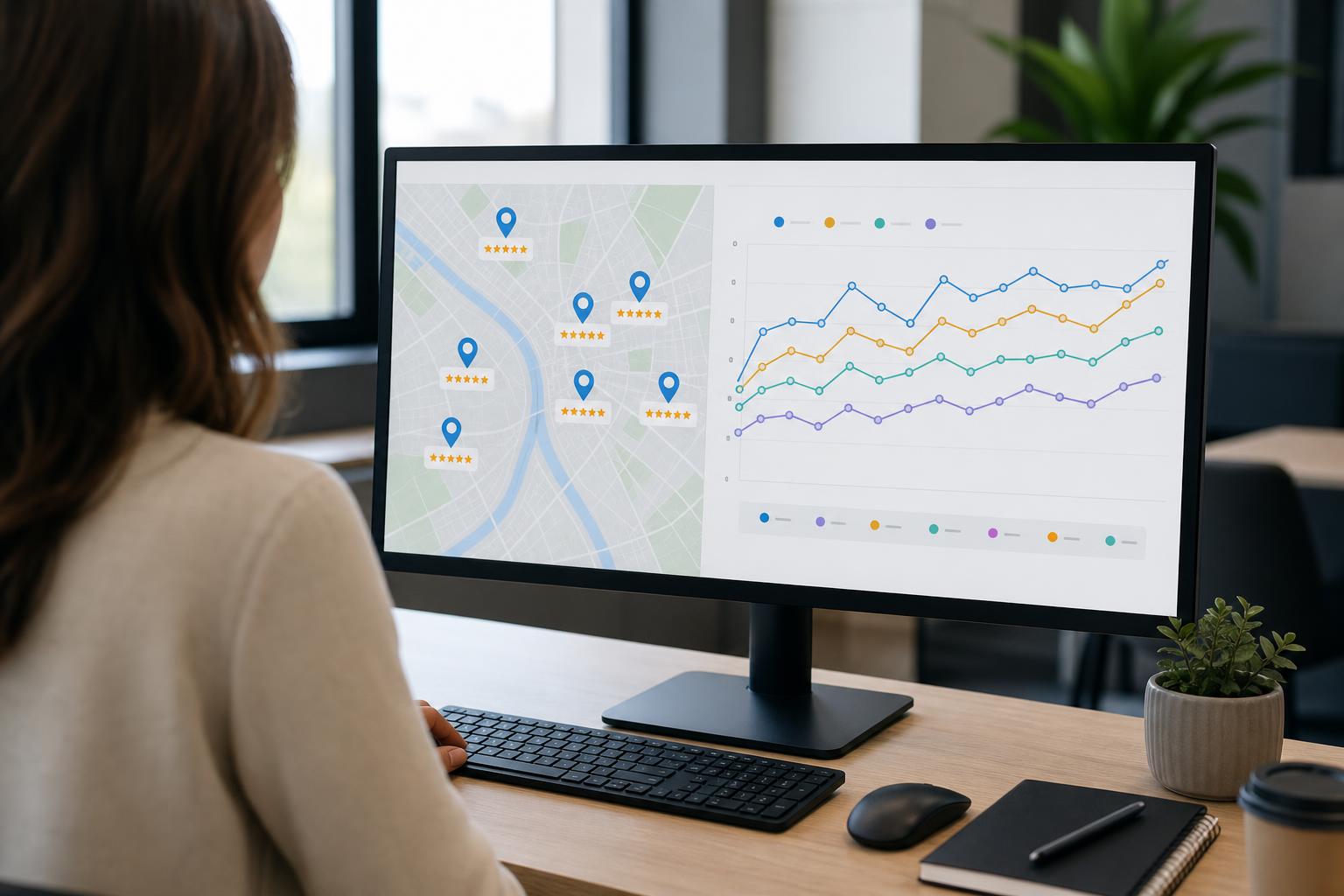
This is also where the local side stops being a one-time setup task. A profile optimized once and never touched drifts — categories go stale, competitors add fresher photos and posts, review-response cadence slips — while factors like review recency and profile completeness keep being scored against you every day nobody's watching it.3 That maintenance, multiplied across several locations, quickly outgrows what one person can track manually alongside running the business, which is the exact gap Alphalead's local SEO and GBP management work is built to close — rank tracking and profile upkeep scaled to how many locations you're actually running, not a flat retainer that ignores it.
What Local SEO Costs vs. What National SEO Costs
The budget gap isn't just a theoretical incentive — it's measured directly. In a 2024 Ahrefs survey of 439 SEO professionals, providers working locally-only charged an average of $1,557/month, while providers serving nationwide or worldwide clients charged $3,473.74/month — more than double.6 That tracks with the signal difference above: local ranking factors are largely procedural, while national rankings require sustained content and link-building investment that costs more in hours.
The practical read: a single-location or regional-service business is likely overpaying for a "full SEO" retainer built around content and links, when the factors that actually matter for it — profile, citations, reviews — cost far less to execute properly. A multi-location business running both at once is where DIY local management starts costing more in missed rankings than it saves in fees, since rank tracking and profile upkeep across several locations is a second job most owners don't have bandwidth for.
Get Your Local SEO Managed by People Who Do This Weekly, Not Once a Quarter
Local SEO is doable without an agency for one new location — but once you're managing more than one address, or your Local Pack position depends on a review pipeline and a profile that need weekly attention rather than quarterly, that's the hands-on execution work Alphalead's local SEO service is built around: ongoing profile management, category accuracy, review response cadence, and rank tracking that scales by tier from monthly checks up to weekly tracking with competitor monitoring — not a one-time setup you're left to maintain alone. See current plans or get in touch for an honest read on whether your business needs local SEO, national SEO, or both, and what it should actually cost.
Frequently Asked Questions
Can a small business rank in the Local Pack without any national SEO work?
Yes. The Local Pack runs on relevance, distance, and prominence — a complete, well-categorized profile with genuine reviews can win Local Pack visibility with no blog content or backlink program at all.1,3 National organic ranking is a separate layer, not a prerequisite for local visibility.
How do I know if my business needs both local and national SEO?
Check the location-footprint signal first: operate from more than one address, or run a national brand with local outlets, and you need both running at once — see the decision table above. Single-location and fully remote businesses rarely need both; they need to identify which single lane applies and commit budget there instead of splitting it thin.
Key Takeaways
Local SEO and national SEO aren't the same skill at different scales — they're two ranking systems weighted by almost entirely different signals, and the four business signals above (physical location requirement, near-me vs. broad search behavior, address count, and budget) tell you which to prioritize faster than guessing ever will. For the local side, see local SEO for small business: the complete guide for the full playbook, and the Google Business Profile optimization checklist for 2026 for the checkable version of the GBP work referenced throughout. Still not sure which lane you're in, or running a multi-location business trying to do both at once? Get in touch or see current local SEO plans and we'll tell you plainly instead of selling you the wrong one.
Want more like this in your inbox?
Occasional, practical marketing advice for local service businesses. No spam.
References (6)
- 1.Google Business Profile Help — Tips to improve your local ranking on Google — relevance, distance, and prominence
- 2.Google — How Search Works: Ranking Results — meaning, relevance, quality, usability, and context
- 3.Whitespark — 2026 Local Search Ranking Factors Report, 47 local-search practitioners scoring 187 factors, published Nov 6, 2025
- 4.Think with Google — How near me shopping searches have changed, published May 15, 2018
- 5.Backlinko — Local SEO Statistics, last updated Dec 22, 2025
- 6.Ahrefs — SEO Pricing survey, n=439 SEO professionals, local vs. nationwide/worldwide provider rates, updated Aug 15, 2024

Written by
Yash · Creative Specialist
Builds the creative and content that gets your business noticed.