Lead GenerationJuly 31, 2026By Yash
The Small Business Lead Generation Playbook: Channels, Costs, and Response Systems

Most small businesses don't have a lead generation problem. They have a system problem. There's no clear read on which channel is working. No fixed idea of what a lead should cost. No process for the minutes after someone raises their hand.
That gap is expensive. 52% of small businesses currently spend less than $1,000 a month on marketing.1 Somewhere between 40% and 68% plan to increase that budget in 2026, depending on which survey you ask.1,2 Before that extra budget goes anywhere, it helps to know three things. What each channel typically costs. What a realistic budget looks like at your size. And why the fastest-growing businesses treat "responding to a lead" as seriously as "generating one."
This guide covers all three, for small and mid-sized businesses in the US, Canada, UK, and Australia — not just one industry. It's the first in a series; see the full lead generation guide collection as more publish.
Key Takeaways
- Instant response to a new lead converts it into a booked meeting 66.7% of the time, versus 30% for standard follow-up — more than double, from the same lead.3
- Google Ads cost per lead averages $70.11 across industries but ranges from $28.50 (automotive repair) to $131.63 (legal services). "What should a lead cost" only has an answer once you name the industry.4
- Two independent 2026 surveys disagree on how many small businesses plan to raise marketing spend: 40% versus 68%. Treat single-survey stats about "what everyone else is doing" with some skepticism.
- Email marketing returns $36-$50 for every $1 spent in most industries, making it one of the highest-return channels available to a small budget.5
- Measuring ROI accurately is marketers' most commonly cited challenge, at 33%.6 An underperforming channel you can measure beats a great one you can't.
In this guide:
- What lead generation actually means
- The main channels
- What a lead should cost
- How much to budget
- Why response speed matters most
- Tracking what's working
- Choosing channels for your stage
- FAQ
What Lead Generation Actually Means for a Small Business
Lead generation means getting a specific, real person to identify themselves to your business. They call, fill out a form, message you, or book a call. That's different from brand awareness. It's different from traffic, too. A thousand website visitors mean nothing if none of them tell you who they are.
Define "lead" narrowly, or every channel will look better than it is. A lead is a real inquiry from someone in your service area or target market, asking about what you actually sell. Vague form fills, wrong numbers, and obvious spam don't count.
Channels split into two broad types. Paid channels cost money per lead, in exchange for immediate visibility. Earned channels — rankings, reviews, referral relationships — build an asset that keeps producing leads without a per-lead cost. Most small businesses need both, in a mix that shifts as the business grows. If you're not sure how to weigh a proposal from an outside marketing partner against doing this in-house, see how to choose a lead generation agency without getting burned, or talk to a growth strategist before committing budget either way.
The Main Lead Generation Channels and What Each One Is For
There's no single best channel. Each one solves a different problem, such as fast visibility versus lasting, low-cost reach, and most small businesses need at least two or three working together.
Paid Search and Social Ads
Google Ads and Meta Ads put your business in front of people who are searching or scrolling right now. They're the fastest way to get your first leads. They don't require existing rankings, reviews, or referral relationships — you're renting visibility instead of earning it. See which platform actually wins by industry if you're deciding between the two.
The tradeoff is cost. Paid ads stop producing leads the day you stop paying. Google Ads cost per lead averages $70.11 across industries, based on an analysis of over 16,000 US search campaigns. But the range is wide: $28.50 for automotive repair, up to $131.63 for legal services4. That range matters more than the average. A business that assumes "$70 per lead" without checking its own industry benchmark can badly misjudge whether a campaign is working.
Most of the cost and response-time benchmarks in this guide, including this one, come from US-based studies. Treat them as a useful starting reference rather than an exact target if you're running campaigns in Canada, the UK, or Australia — local competition and click costs can shift the real number in either direction.
Local SEO and Google Business Profile
If your business has a physical location or a defined service area, showing up in Google's local map results is often the highest-value organic channel you have. A strong local presence keeps producing leads with no ongoing per-click cost. The investment is in earning visibility, not renting it.
Organic SEO and Content
Website, blog, and SEO content was rated the top ROI channel by B2B marketers in HubSpot's 2026 State of Marketing report — ahead of paid channels and social.6 It's slower to produce a first lead than paid ads. But each ranking page keeps generating inquiries for as long as it holds position, with no per-lead cost once it's built.
Email Marketing
Email is one of the highest-return channels available to a small budget. Most industries see $36 to $50 back for every $1 spent, with retail and ecommerce businesses landing toward the top of that range at roughly 45:1.5 The catch: email only works on people who've already given you their contact information. It's a channel for nurturing and repeat business, not for finding new leads from scratch.
Reviews and Referrals
Word of mouth is still the most trusted form of advertising by a wide margin. In Nielsen's Global Trust in Advertising study, 88% of consumers said they trust recommendations from people they know above any paid advertising format.7 It's still the standard reference for this behavior, though the underlying data predates the most recent marketing cycle. Online reviews extend the same trust into search results: 96% of consumers read reviews at least occasionally before choosing a local business.8 Neither channel has a fixed cost per lead the way paid ads do. The investment is in service quality, and in actively asking for reviews and referrals instead of waiting for them.
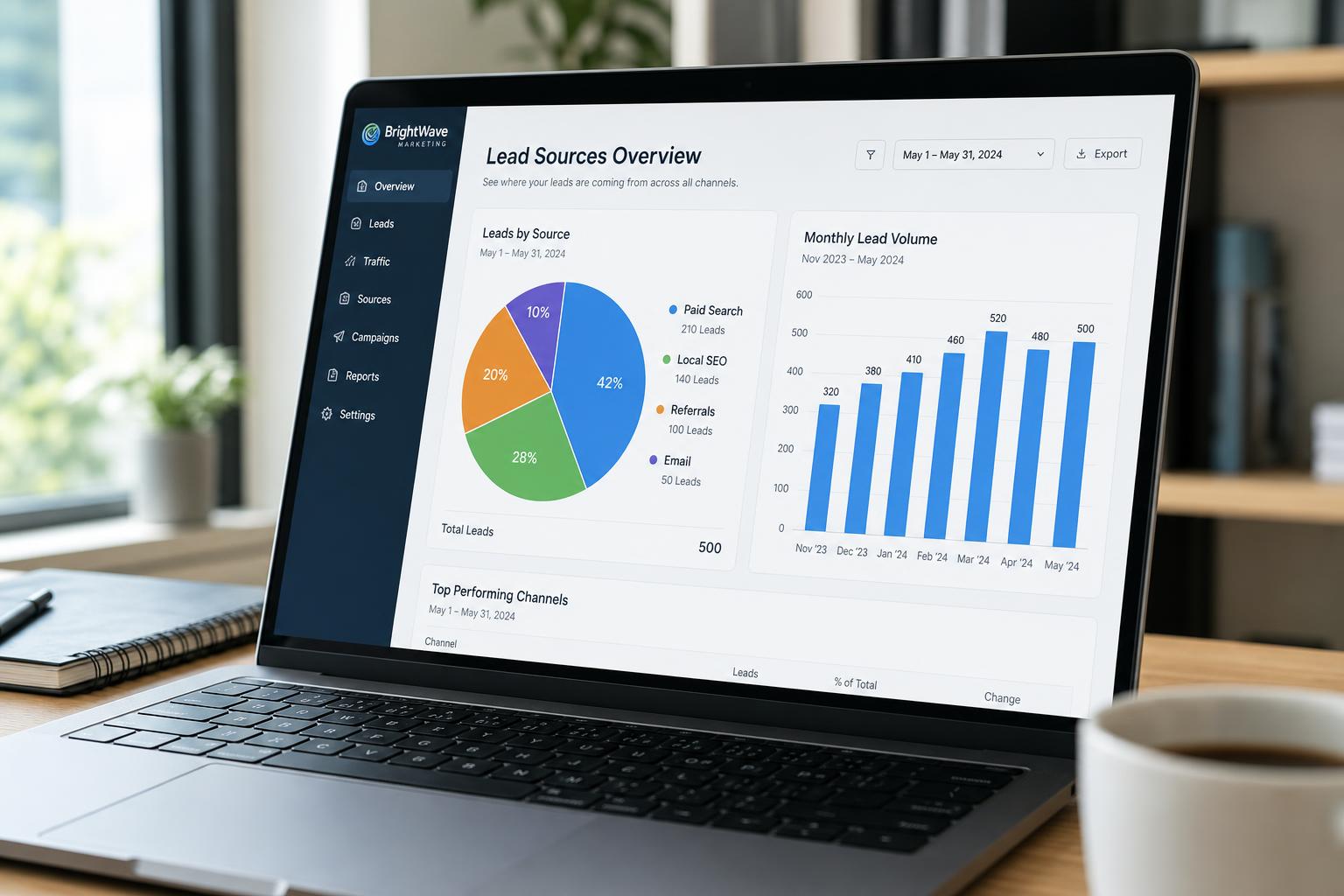
What Should a Lead Cost? Cost-Per-Lead Benchmarks
There's no universal answer. Treat any source that gives you one flat number, without naming an industry, with caution. Cost per lead is the total amount spent on a channel divided by the number of qualifying leads it produced, and it scales with how competitive and valuable the industry is. Legal services sits at the expensive end, at $131.63 per lead, because a single client can be worth tens of thousands of dollars. Automotive repair sits at the cheap end, at $28.50, because both ticket size and competition are lower4.
The practical takeaway: before judging a campaign "too expensive," find the benchmark for your specific industry, not a generic average. A $90 cost per lead might be excellent for one business and a loss-making mistake for another, depending entirely on what a converted lead is worth to each one. See the full cost-per-lead benchmarks by industry for the complete breakdown across 20+ industries and both Google and Meta Ads.
How Much Should a Small Business Budget for Lead Generation?
This is where the data gets genuinely inconsistent, which is itself a useful finding. Two independent 2026 surveys asked small business owners almost the same question and got different answers. LocaliQ found about 40% of small businesses plan to increase marketing budgets in 2026, based on a survey of roughly 300 US/Canada respondents.1 Constant Contact found 68%, based on a larger survey of 1,500+ respondents across US/Canada/UK/Australia/NZ.2
Reading the gap between surveys: A 28-point gap between two same-month surveys of the same population isn't a data error to average away. It's a signal that "increasing budget" gets defined loosely — some owners count inflation-adjusted spend as an increase, others only count a deliberate new line item. The practical lesson: don't benchmark your own budget decision against "what percent of businesses are doing X." Benchmark it against your own cost-per-lead and cost-per-customer math instead.
The disagreement doesn't mean either survey is wrong. It means "what other small businesses are doing" is a weaker planning input than it looks. A more reliable starting point is your own numbers: what a converted lead is worth to you, and what you can afford to pay for one, using the cost-per-lead benchmarks above. LocaliQ's data adds one more useful anchor: 52% of small businesses currently spend less than $1,000 a month on marketing in total — a reasonable floor to calibrate against, not a target to undershoot. For a fuller breakdown of marketing budget as a percentage of revenue, including how it varies by B2B vs. B2C business type, see how much a small business should spend on marketing.
Why Response Speed Decides More Deals Than Ad Spend Does
Generating a lead is only half the job. What happens in the following minutes often matters more than which channel produced the lead in the first place.
In a 2025 study of roughly four million form submissions, instant response converted a lead into a booked meeting 66.7% of the time. Standard, non-instant follow-up converted at 30% — less than half the rate, from the same volume of leads.3 That gap shows up before any difference in ad spend, targeting, or offer quality. It's purely about what happens after the lead comes in — see why speed beats budget for the full data on this.

Response benchmarks vary by industry. That variation is itself useful context. Personal-injury law firms are known for treating speed as a competitive weapon. Even so, one large study of 1,333 firms found a median response time of just 13 minutes among firms that responded at all, yet only 25% of firms responded within 5 minutes and 26% never responded to the lead at any point.9
Unique insight: if an industry built around speed still has a quarter of firms going silent on every lead, most other industries are almost certainly doing worse. That gap is the opportunity, not a problem to accept. Instant response means acting within minutes, not hours, and a small business can build that with something as simple as an autoresponder, a same-hour callback rule, or an AI-assisted first reply. Doing that puts a business ahead of a large share of its competition, regardless of which channel produced the lead.
How to Tell If a Channel Is Actually Working
Picking channels is the easy part. Knowing whether they're working is where most small businesses lose the thread. It's a widespread problem, not just a small-business one: measuring marketing ROI accurately is the most commonly cited challenge among marketers surveyed, at 33%.6
Consider a simple example. A channel that produces leads at half the cost per lead, but converts them into customers at a third of the rate, is quietly losing money compared to the "more expensive" option. A workable tracking setup doesn't need to be complicated.
- Tag every lead source. A call from a Google Ads number, a form fill tagged with a UTM parameter, and a walk-in referral should never end up in the same untracked bucket.
- Track lead to closed deal, not just lead to form-fill. A channel with cheap leads that never close is worse than one with a higher cost per lead and a higher close rate.
- Review cost per booked customer monthly, not per lead. Cost per lead is a leading indicator. Cost per customer tells you if a channel is actually profitable.
- Give a channel enough time before judging it. Paid channels can produce signal within days. SEO, reviews, and referral programs take months to build momentum. Judging them on a 30-day window will make them look like failures when they're actually compounding.
Most tracking failures trace back to the same small set of execution mistakes — see 10 lead generation mistakes costing small businesses customers for the full list.
Choosing Channels for Where Your Business Is Right Now
There's no fixed formula. But the channel mix that makes sense changes predictably with business stage.
Brand-new or pre-revenue: paid search and social ads are usually the fastest way to validate demand. They don't depend on existing rankings or reviews. Expect a higher cost per lead here — you're paying to skip the years it would otherwise take to build organic visibility.
Established with steady revenue: this is the stage to shift budget toward local SEO, Google Business Profile optimization, and a structured review-generation process. These channels take longer to build. They progressively lower blended cost per lead, since they carry no ongoing per-click cost once established.
Growing with a repeat-customer base: email marketing and a formal referral program become worth the setup effort once there's an existing customer list to nurture, and a track record to point new referrals toward.
At every stage, the response-speed work above applies immediately and costs little to implement. It's the one lever that pays off regardless of which channels are generating the leads. If you want a second opinion on which mix fits your stage, our team reviews this free on a discovery call.

Frequently Asked Questions
How much should a small business spend on lead generation each month?
There's no single figure across industries. 52% of small businesses currently spend under $1,000 a month on marketing in total.1 A growing share plan to increase that in 2026 — anywhere from 40% to 68% of businesses, depending on the survey.1,2 A more useful starting point than a benchmark: work backward from what a converted customer is worth, and what you can afford to pay per lead in your specific industry.
What's a good cost per lead?
It depends entirely on the industry and what a converted lead is worth. Google Ads cost per lead ranges from $28.50 (automotive repair) to $131.63 (legal services), with a cross-industry average of $70.114. Treat any generic "$X per lead is good" claim skeptically if it doesn't name an industry.
How fast should I respond to a new lead?
As close to instantly as possible. Instant response converts leads into booked meetings at more than twice the rate of standard follow-up — 66.7% versus 30% — based on an analysis of roughly four million form submissions.3
Which lead generation channel has the best ROI?
There isn't one universal answer, but the data points the same direction. Email marketing returns $36-$50 per $1 spent in most industries.5 Website, SEO, and content was rated the top ROI channel by B2B marketers surveyed in HubSpot's 2026 State of Marketing report.6 Both are channels you build rather than rent. The tradeoff: they take longer to start producing leads than paid ads do.
Key Takeaways and Next Steps
Lead generation for a small business comes down to three decisions. Which channels fit your current stage. What you're willing to pay per lead, given your industry's real benchmarks. And how fast you respond once a lead comes in. Get the third one right and it improves the return on every channel above it. It's the one part of this playbook that costs almost nothing to fix, and pays off immediately.
This is the first post in a broader series. So far it also includes how much you should actually spend on marketing, cost-per-lead benchmarks by industry, Google Ads vs. Meta Ads by industry, how to vet and choose a lead generation agency, why response speed beats budget, how AI lead follow-up works and what it doesn't replace, landing page vs. full website, and 10 lead generation mistakes costing small businesses customers. For the broader operational question behind all of this — how to structure, staff, and budget your marketing function as a whole — see running small business marketing like an operation. Subscribe below to get each new one as it publishes, or get in touch if you'd rather talk it through directly.
Want more like this in your inbox?
Occasional, practical marketing advice for local service businesses. No spam.
References (9)
- 1.LocaliQ — The Big Small Business Marketing Trends Report for 2026, Feb 2026, ~300 US/Canada respondents
- 2.Constant Contact — Small Businesses Double Down for 2026, Feb 2026, 1,500+ respondents across US/Canada/UK/Australia/NZ
- 3.Chili Piper — 2025 Benchmark Report on Demo Form Conversion Rates, ~4 million form submissions
- 4.WordStream — Google Ads Benchmarks 2025-2026
- 5.Litmus — 2025 State of Email Survey, ~500 marketing professionals
- 6.HubSpot — 2026 State of Marketing Report
- 7.Nielsen — Global Trust in Advertising, 2021
- 8.BrightLocal — Local Consumer Review Survey 2025, 1,026 US consumers
- 9.Hennessey Digital — 2025 Lead Form Response Time Study, 1,333 firms

Written by
Yash · Creative Specialist
Builds the creative and content that gets your business noticed.