Lead GenerationAugust 3, 2026By Yash
Landing Page vs. Full Website: What Converts Leads Better
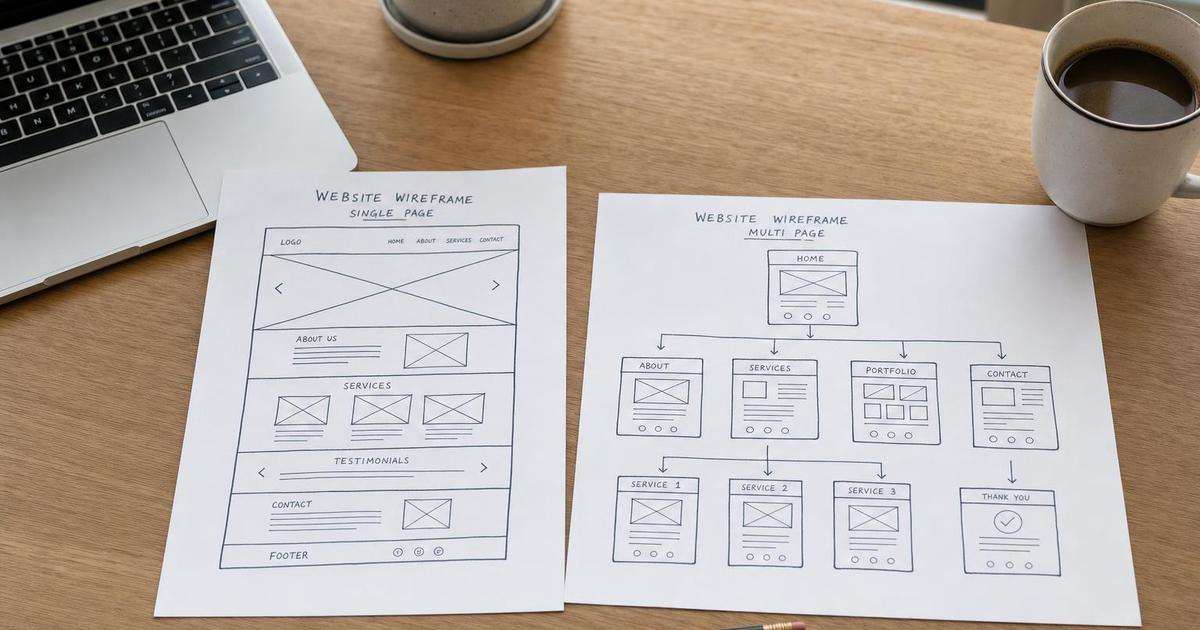
"Do I need a full website, or is a landing page enough?" is really two questions wearing one costume. One is about conversion — which page structure gets more of your traffic to actually convert. The other is about strategy — which asset your business needs long-term. This guide answers both, with the data to back it, instead of treating "landing page vs. website" as a single either-or choice.
We've already covered the specific mistake of sending ad traffic to your homepage instead of a dedicated landing page. This post is the broader question behind it: which structure your business actually needs.
Key Takeaways
- Google Ads landing page conversion rates average 7.52% across industries, but range from 2.55% (Finance & Insurance) to 14.67% (Automotive Repair) — the platform and page matter less than what industry you're in.1
- Businesses with 30+ landing pages generate roughly 7x more leads than those with fewer than 10 — a strong case for landing pages as a volume tactic, not a one-and-done page.2
- 83% of small businesses now have a website, up from 64% in 2018, and 69% of consumers say a website is essential for local business credibility.3,4
- Consumers are willing to spend 7x more time and money researching a business through its website ($177) than through its social media presence ($36).5
- A landing page and a full website aren't competing options — most businesses that grow past their launch phase end up needing both, just for different jobs.
In this guide:
- What each one is actually for
- The case for a landing page
- The case for a full website
- Speed and cost tradeoffs
- How to decide for your business
- FAQ
What Each One Is Actually For
A landing page is a single, standalone page built around one offer and one conversion goal — book a call, request a quote, download a guide. It has no main navigation pulling visitors elsewhere, because pulling visitors elsewhere is exactly what it's designed to prevent.
A full website is a multi-page site — home, services, about, contact, and often a blog or resource section — built to serve multiple visitor intents at once: new prospects, returning customers, referral partners, and search engines all landing on different pages for different reasons.
Neither is inherently "better." They're built for different jobs, and the right choice depends on which job your business needs done right now.
The Case for a Landing Page
A landing page's advantage is focus. Every element on the page supports one decision, which is why dedicated landing pages consistently convert traffic sent to them from a specific campaign better than a general-purpose page does. Conversion rates vary sharply by industry and platform, though — Google Ads landing pages average 7.52% across industries, but that hides a wide range: Automotive Repair leads at 14.67%, while Finance & Insurance sits at just 2.55%.1
Landing pages also scale in a way many small businesses underuse: companies running 30 or more landing pages generate roughly 7x more leads than companies running fewer than 10.2 That figure comes from an older lead-generation study still referenced in current industry guidance, so treat it as a directional rule of thumb rather than a fresh 2026 finding — but the underlying logic holds: more landing pages means more chances to match a specific offer to a specific audience, rather than sending every visitor to one generic page.
A landing page wins when:
- You're launching a single, time-bound campaign (a seasonal offer, an event, a specific ad)
- You have one clear conversion goal and don't want navigation pulling visitors away from it
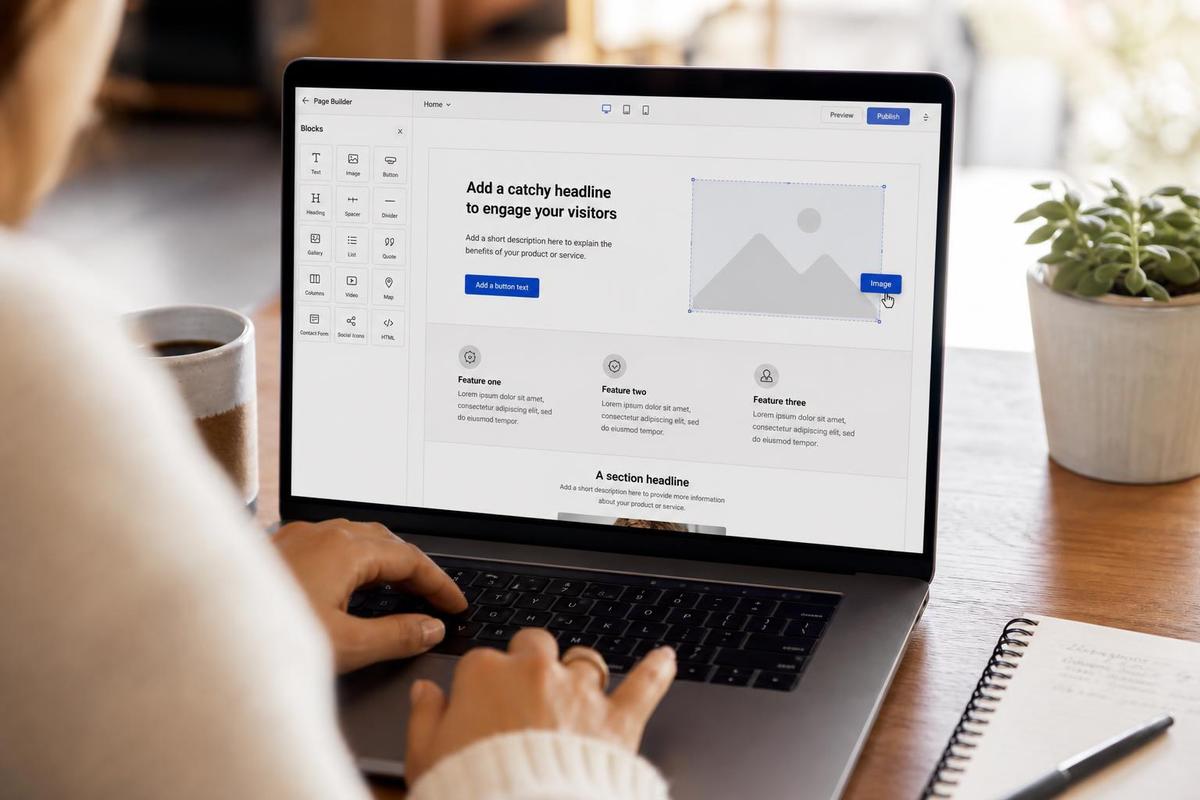
- Speed matters more than long-term search visibility — a landing page can go live in hours to a few days using a no-code builder, versus weeks for a full custom site
The Case for a Full Website
A full website's advantage is reach and trust. It can rank for many more search terms than a single page structurally can, and it's still the primary credibility signal most consumers look for before trusting a small business at all.
83% of small businesses now have a website, up from 64% in 2018 — 17% remain offline.3 That adoption trend matters because of what having a site actually buys a business: in a 2026 survey of 1,201 US consumers, 69% said a website is essential for a local business's credibility, and online reviews aside, a website ranked as the #2 trust factor overall, ahead of social media presence and Google Business verification.4
The trust gap shows up in how much consumers are willing to invest in checking a business out. Consumers report being willing to spend roughly 7x more time and money researching a business through its website ($177) than through its social media presence ($36), and 14x more are willing to spend $500+ evaluating a business via its website (14%) than via social alone (1%).5

Unique insight: the consumer-research pattern above suggests a website and a social profile aren't interchangeable trust signals, even though many small businesses treat an active Instagram or Facebook page as "close enough" to a real site. A social profile is where people expect to be entertained or updated; a website is where people go once they're seriously deciding whether to spend real money with you. Skipping the site doesn't just mean losing search traffic — it means losing the exact moment a prospect is most ready to be convinced.
A full website wins when:
- Your business serves more than one distinct customer intent — multiple services, multiple buyer types, or a sales process that needs education across several pages
- Long-term organic search visibility matters — a multi-page site can target many keyword clusters at once, where a single landing page structurally cannot
- Credibility is your primary conversion barrier, not just traffic volume
- You're building a durable asset rather than a tool for one campaign
Speed and Cost Tradeoffs
The practical difference between the two options isn't just conversion rate — it's how fast and how expensive each is to stand up, which often decides the real-world choice for a small business on a tight timeline or budget.
| Approach | Typical Time to Launch | Typical Cost |
|---|---|---|
| Landing page (no-code builder) | Hours to a few days | ~$200-600/year (builder + hosting) |
| Custom landing page (freelancer) | 1-2 weeks | $500-2,000 standalone |
| Small business website (freelancer) | 3-6 weeks | $1,500-8,000 one-time |
| Small business website (agency, 5-15 pages) | 4-8 weeks | $6,000-15,000+ |
These figures are consensus ranges reported across multiple web-design vendors rather than a single authoritative study, so treat them as typical industry ranges to plan around, not exact quotes for your business. The pattern is consistent regardless of the exact numbers, though: a landing page is the faster, cheaper way to test an offer or launch a specific campaign; a full website is the larger investment that pays off as a long-term asset once your business has more than one thing to say to more than one type of visitor.
How to Decide for Your Business
Most small businesses don't actually face a binary choice — they face a sequencing question. A common, practical pattern: launch a landing page for the immediate campaign, build the full website in parallel for organic visibility and credibility, then fold the landing page into the site as a proper service page once the campaign proves itself out.
Ask these three questions to figure out where you sit right now:
- Do I have one offer or several? One offer, one audience, one campaign → landing page fits fine on its own for now. Multiple services or customer types → you need the structure a full site provides.
- Am I optimizing for a launch or for the long term? Fast validation of a new offer → landing page. Building something that should still be working for you in two years → full website.
- Is my biggest obstacle traffic or trust? If people are finding you but not converting, a focused landing page matched to your ad message often fixes more than a full site redesign would. If people are finding you and leaving because you don't look credible yet, the website — not the landing page — is the actual problem.
None of this has to be guesswork. If you're not sure which side of these questions your business actually sits on, our team can look at your current setup and tell you plainly whether a landing page, a full site, or both is the right next move.
Frequently Asked Questions
Do I need a website if I already have a landing page for ads?
It depends on what else your business needs to do. A landing page alone can work fine while you're validating a single offer, but 83% of small businesses now have a full website, and 69% of consumers say one is essential for credibility.3,4 If your business has more than one service or customer type, or you want organic search traffic beyond a single campaign, you'll eventually need the fuller structure a website provides.
Do landing pages actually convert better than websites?
For a single, focused campaign, yes — a page built around one goal with no competing navigation generally outperforms sending the same traffic to a general-purpose page. But conversion rate varies enormously by industry, from 2.55% to over 14% even among landing pages specifically, so "landing pages convert better" isn't a fixed number — it depends heavily on what you sell and who you're selling to.1
Can a small business start with just a landing page?
Yes, and it's often the right call early on — it's faster and cheaper to launch than a full site.1 Just recognize the tradeoff: you're gaining speed and focus while giving up the organic search reach and credibility signals a full website provides, which matters more as your business grows past its first campaign.
Key Takeaways
A landing page and a full website solve different problems — one is built for a single conversion goal, the other for reach and long-term trust. Most growing businesses eventually need both, in sequence rather than as a permanent either-or choice. If you're still sending ad traffic to your homepage instead of a dedicated page, that's a separate and cheaper fix — see the full list of lead generation execution mistakes for that and nine others. And before you build either one, pick the ad platform your traffic should actually come from, since that decision shapes what the page itself needs to say. Once you've settled on a format, the design of the page matters just as much — see 10 website design elements every small business site needs and the research on how design quality affects ad and landing page conversion rates. See the full lead generation playbook for how this fits into your overall strategy, or talk to our team about which structure fits your business right now.
Want more like this in your inbox?
Occasional, practical marketing advice for local service businesses. No spam.
References (4)
- 1.WordStream/LocaliQ — Conversion Rate Benchmarks, updated November 17, 2025
- 2.HubSpot — Single-Page vs. Multiple-Page Websites, page updated June 11, 2026
- 3.Clutch.co — Small Business Website Report, published August 21, 2025
- 4.DreamHost — 2026 Local Business Trust Index, published January 6, 2026, n=1,201 US consumers

Written by
Yash · Creative Specialist
Builds the creative and content that gets your business noticed.