Lead GenerationAugust 3, 2026By Yash
How AI Lead Follow-Up Works (and What It Doesn't Replace)
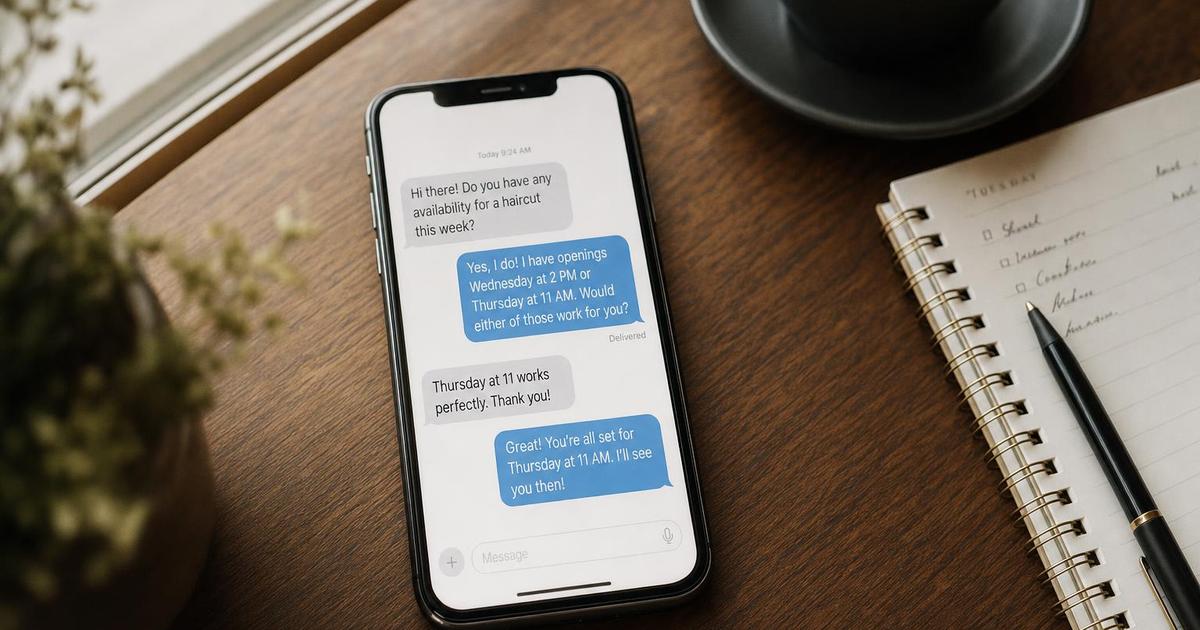
AI can follow up with a lead in seconds instead of hours, and for a lot of small businesses that's the whole appeal. But speed isn't the same as trust, and the data on how consumers actually feel about AI-handled follow-up is more mixed than most vendor pitches let on. This guide covers how AI lead follow-up actually works in practice, what the evidence says about where it helps, and — just as important — where handing a lead to a human still wins.
We've already covered why response speed beats budget as a general principle. This post is about the specific tool now used to close that speed gap, and its real limits.
Key Takeaways
- 91% of small businesses using AI say it's boosting revenue, and 75% are actively investing in or experimenting with it, per Salesforce's SMB Trends survey of 3,350 SMB leaders.1
- Willingness to accept an AI assistant swings hard by channel: 76% of consumers whose last service interaction was on social media are open to it, versus just 35% of those whose last interaction was by phone.2
- Only 7.8% of consumers are "extremely confident" AI can accurately resolve their request, and 66.6% would rather wait longer for a human than get a faster AI answer with an accuracy trade-off.3
- 96% of companies believe AI is improving their customer-facing operations, but only 45% of consumers say they feel understood by the brands they deal with — a 51-point perception gap.4
- AI follow-up is best used to close the response-time gap on every lead; a human handoff still wins once a lead is complex, hesitant, or ready to make a real decision.
In this guide:
- What AI lead follow-up actually means
- How small businesses are using it
- Where AI follow-up genuinely helps
- What it doesn't replace
- How to set it up without losing trust
- FAQ
What AI Lead Follow-Up Actually Means
AI lead follow-up is software that contacts a new lead automatically — by chat, SMS, or voice — in the minutes after they submit a form or make an inquiry, without a person manually starting that first message. It ranges from simple rule-based chatbots that answer FAQs and book a calendar slot, to more capable systems that hold a back-and-forth text or voice conversation, qualify the lead against your criteria, and hand off to a person only once the lead is ready.
It's not the same thing as marketing automation broadly. An automated email drip that fires on a schedule isn't "AI follow-up" in the sense this post means — the distinguishing feature here is a system that responds to what the specific lead says or does, in something close to real time, rather than sending the same sequence to everyone.
How Small Businesses Are Actually Using AI Lead Follow-Up
Adoption has moved past the experimentation phase for a meaningful share of small businesses. Salesforce's SMB Trends survey of 3,350 SMB leaders found 91% of those using AI say it's boosting revenue, 75% are investing in or actively experimenting with it, and 34% say they've fully implemented it somewhere in the business.1 On the sales side specifically, HubSpot's State of Sales survey of 1,000+ sales professionals found AI is now the single tool reps use most — ahead of CRM software and everything else in the stack — with 84% saying it saves time and 83% saying it personalizes prospect interactions.5
In practice, three patterns show up most often at the small-business scale:
- Instant chat response on the website or ad landing page. A visitor who fills out a form or opens a chat widget gets an immediate reply confirming receipt, asking a qualifying question or two, and offering to book a time — instead of waiting for someone to notice the form submission.
- AI-assisted SMS follow-up. For leads who submit a phone number, an automated text confirms receipt within seconds and can carry a short qualifying conversation before a human takes over. This matters because SMS response windows are typically measured in minutes, not hours, and a delayed first text often gets ignored entirely.
- AI-assisted CRM sequencing. Rather than a human deciding when to send the next follow-up, the CRM uses lead behavior (opened an email, visited pricing, went quiet for three days) to trigger the next message or task automatically, so leads don't fall through the cracks between a rep's other work.

At the largest scale, Salesforce's own internal example is striking: its sales team used AI agents to work 130,000 previously untouched leads and generated 3,200 new opportunities in four months.6 That's a single company's own case, not a survey benchmark, but it illustrates the underlying mechanism small businesses are borrowing at a much smaller scale — AI follow-up doesn't need to outperform your best rep, it just needs to reach leads that would otherwise get no response at all.
Where AI Follow-Up Genuinely Helps
The clearest, most defensible case for AI lead follow-up isn't that it converts better than a great salesperson — it's that it closes the response-time gap on leads that would otherwise wait, or never get a response at all. Non-response and slow response are already documented as widespread problems: a majority of businesses across recent studies either respond too slowly to matter or don't respond at all. AI follow-up's job is specifically to make sure every lead gets an immediate first touch, even outside business hours or when your team is at capacity.
Channel matters more than most businesses assume when deciding where to deploy it. Gartner's survey of 4,879 consumers found willingness to use a GenAI assistant swings sharply depending on the channel someone was already using: 76% of consumers whose last service interaction was on social media are open to an AI assistant handling it, but that drops to just 35% among people whose last interaction was by phone.2
Unique insight: most small businesses deploy AI follow-up uniformly across every channel, but the data says that's backwards. A text or chat-based first response is working with the grain of what leads already expect; an AI voice call answering the phone is working against it. If budget or setup time is limited, chat and SMS are the higher-tolerance channels to automate first — voice is the one where a fast human callback still earns more trust per the channel data above.
What AI Follow-Up Doesn't Replace
This is the part most vendor pitches skip, and it's where the evidence is actually strongest and most consistent. Three independent studies — from different organizations, different years, different methodologies — converge on the same finding: consumers trust AI far less than businesses assume, especially once the interaction gets complicated.
Parloa's 2026 Consumer Patience Index, based on a survey of 1,001 US adults, found only 7.8% are "extremely confident" that automated systems can accurately resolve their request, and 30.4% report zero trust in AI handling a complex service interaction at all.3 Given a choice, 66.6% said they'd rather wait longer for a human than get a faster answer from AI with an accuracy trade-off, and 55.5% will abandon an automated system within three minutes if it isn't resolving their issue.3 An earlier Callvu survey found a similar pattern from a different angle: 81% of consumers said they'd wait at least a minute for a live human rather than interact immediately with an AI assistant.7
The gap between how well businesses think AI is doing and how leads actually experience it is the most concrete evidence of the mismatch. Twilio's State of Customer Engagement report, surveying 7,640 consumers and 637 business leaders across 18 countries, found 96% of companies believe AI is improving their customer-facing operations — but only 45% of consumers say they feel understood by the brands they interact with.4 That's a 51-point gap between internal confidence and how the experience actually lands with the person on the other end.
Even businesses that are investing heavily in AI follow-up admit the tooling isn't fully there yet. Intercom's Customer Service Transformation Report found 76% of support teams increased AI investment beyond what they'd originally planned this past year, yet only 19% say their current tools always fully meet their needs.8 Adoption is outpacing readiness — a useful caution against assuming a tool is working well just because it was expensive or widely adopted.
Put together, this is the boundary line: AI follow-up earns real trust for the fast, simple, "let me confirm and schedule" moments a lead needs answered immediately. It loses that trust fast the moment a lead is complex, hesitant, price-sensitive, or genuinely needs to be talked through a decision — that's still a human's job, and rushing a lead past that moment with automation is more likely to lose them than close them.

How to Set Up AI Follow-Up Without Losing Trust
None of the above means AI follow-up isn't worth using — it means it's worth using deliberately, with a clear handoff point built in from the start.
- Automate the confirmation, not the close. Use AI for the instant "we got your message, here's what happens next" step and basic qualifying questions. Reserve pricing negotiations, complex questions, and anything emotionally weighted for a human.
- Match the channel to the tolerance data. Chat and SMS earn more trust for a first automated touch than voice does, per the channel breakdown above — lead with those before automating phone-based follow-up.
- Build in an easy, visible human handoff. Every AI interaction should offer a clear, fast way to reach a person, especially since more than half of consumers will abandon an automated system within three minutes of feeling stuck.
- Measure the perception gap yourself, don't assume it away. Ask a sample of recent leads whether the automated follow-up felt helpful or frustrating. The 51-point gap between how companies rate their own AI and how consumers actually experience it exists because most businesses never check.
Get a Follow-Up System Built Around Where AI Actually Helps
Most small businesses either automate everything or automate nothing — both waste the tool. We build lead follow-up systems for clients that use AI for the instant response and qualification work it's genuinely good at, with a fast, built-in handoff to a real person before a lead ever hits the trust wall the data above describes. Talk to a growth strategist if you want your follow-up process reviewed against this framework instead of guessing at where the line should be.
Frequently Asked Questions
Is AI lead follow-up actually effective for small businesses?
The adoption data suggests yes for the specific job of closing the response-time gap: 91% of small businesses using AI report it's boosting revenue, and 75% are actively investing in or experimenting with it.1 Effectiveness drops sharply, though, once the interaction moves past a simple confirmation or qualifying question — only 7.8% of consumers are "extremely confident" AI can accurately resolve a more complex request.3
Will using an AI chatbot for lead follow-up hurt customer trust?
It can, if it's used past its limits. Two-thirds of consumers (66.6%) would rather wait longer for a human than get a faster AI answer with an accuracy trade-off, and over half will abandon an automated interaction within three minutes if it isn't resolving their issue.3 Used for the initial fast response, with a visible handoff to a human once the conversation gets complex, AI follow-up avoids the trust problem instead of creating one.
Should AI handle phone calls too, or just chat and text?
Start with chat and text. Willingness to accept an AI assistant is highest for social/chat channels (76%) and lowest for phone (35%), based on a survey of 4,879 consumers.2 That gap reflects what people already expect from each channel — automating voice calls before chat and SMS goes against the grain of consumer preference.
Key Takeaways
AI lead follow-up earns its keep by making sure every lead gets an immediate first response — the job most businesses already fail at manually. It loses trust fast the moment it's asked to replace, rather than support, an actual human conversation. Get the boundary right and it's a genuine advantage; get it wrong and it just automates the same non-response problem in a different form. For the broader case on why speed matters more than most people assume, see why response speed beats budget, or the full lead generation playbook for how this fits into your overall budget and channel mix. If it's specifically the phone channel you're trying to cover, AI voice agents for small business and missed-call text-back go deeper on the two ways to close that gap. For how AI follow-up fits into the rest of your marketing operation — budgeting, agency selection, and reputation management — see running small business marketing like an operation.
Want more like this in your inbox?
Occasional, practical marketing advice for local service businesses. No spam.
References (8)
- 1.Salesforce — Small & Medium Business Trends Report, 2025, n=3,350 SMB leaders globally
- 2.Gartner — Press release, June 2026, n=4,879 consumers, surveyed January-February 2025
- 3.Parloa — Consumer Patience Index 2026, July 2026, n=1,001 US adults, fielded by Propeller Insights
- 4.Twilio — State of Customer Engagement Report, 6th ed., 2025, n=7,640 consumers and 637 business leaders across 18 countries
- 5.HubSpot — State of Sales Report, updated September 2025, n=1,000+ global sales professionals
- 6.Salesforce — State of Sales, 7th ed., February 2026
- 7.CMSWire (Callvu survey) — Reporting on a Callvu consumer survey, 2024, n=594 consumers
- 8.Intercom — Customer Service Transformation Report 2025, January 2025, n=2,000+ customer service professionals

Written by
Yash · Creative Specialist
Builds the creative and content that gets your business noticed.