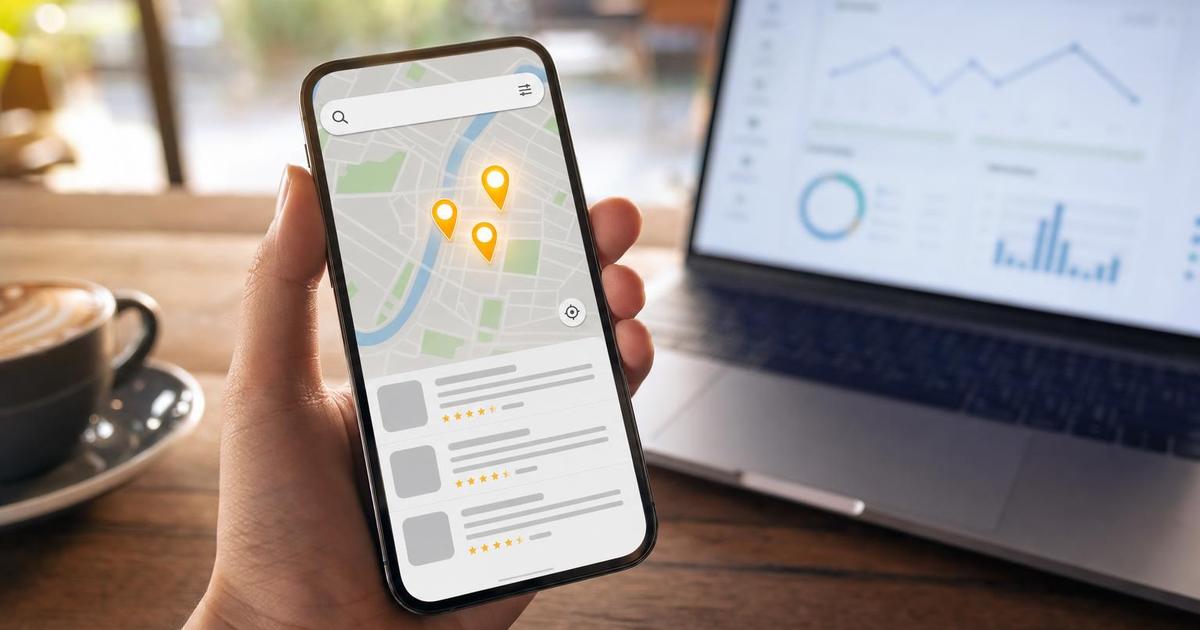
The Google Local 3-Pack is the block of three business listings and a map that appears above the regular organic results for searches like "plumber near me" or "bakery in Austin." It's ranked on a narrower, better-documented set of signals than general organic search: Google names the three factors directly, and Whitespark's annual survey of local search professionals scores exactly how much each underlying signal matters. This guide covers what those factors are, how much each weighs, and what to do about the ones you can influence — grounded in Google's own guidance and Whitespark's 2026 survey, not guesswork.
Key Takeaways
- Google states local rankings are "mainly based on relevance, distance, and popularity" — its own term for what the industry calls prominence.1
- In Whitespark's 2026 survey of 47 local search experts scoring 187 factors, a business's primary Google Business Profile category is the single highest-weighted local pack ranking factor, ahead of proximity itself.2
- Review signals are rising fastest: high numerical ratings and review volume with text both rank in the top 10 factors, and Whitespark's report flags review and behavioral signals as the biggest movers for 2026.2
- 97% of consumers read reviews before choosing a local business, and 74% specifically look for reviews written in the last three months — recency is what most buyers filter on.3
- NAP (name, address, phone) consistency between your website and your Google Business Profile ranks in the top 15 factors on its own, separate from citations elsewhere.2
In this guide:
- What the 3-pack is
- The three factors Google uses
- Where the top factors sit
- Proximity
- Relevance
- Prominence
- NAP and citations
- Profile completeness
- On-page local signals
- Common mistakes
- FAQ
What the Google Local 3-Pack Actually Is
The 3-pack is the map-plus-three-listings block Google shows for searches with clear local intent — a service or business type paired with a location or "near me." It sits above the standard blue-link results, which is why it draws a disproportionate share of clicks: for a local searcher, the 3-pack often is the search result. It's also not governed by the same sprawling, hundreds-of-signals system as general organic search — Google names exactly three factors it uses, in plain language, on its own support pages.
The Three Factors Google Says It Uses
Google's Business Profile Help documentation states that "local results are mainly based on relevance, distance, and popularity," then defines each one directly:
- Relevance: "how well a Business Profile matches what someone is searching for."
- Distance: "how far each business is from the customer who's searching."
- Prominence: "how well-known a business is. Prominent places are more likely to show up in search results."1
Google's own tips map onto the factors below: verify your business, keep information current, respond to reviews, add photos. Google is explicit that "there's no way to request or pay for a better local ranking on Google."1 The industry shortens "popularity" to prominence — relevance, distance, and prominence are the terms used here.
Where the Highest-Weighted Factors Actually Sit
Google's framework names the three categories; it doesn't say which individual signals move a listing most. Whitespark's 2026 survey — 47 local search professionals scoring 187 factors, published November 2025 — fills that gap. Its top 8 local pack factors split across relevance, proximity, and prominence, and the order isn't what most owners guess.
Notice what's absent: backlinks, domain authority, posting frequency — the classic organic-SEO factors. Those still matter for local organic rankings, but for the map pack specifically, the profile itself and its review signals outrank the website-authority factors most owners assume come first.
Proximity: What You Can and Can't Control
Proximity is the one factor a business can't change on demand. Three of the top 8 factors are proximity-related: proximity of the listed address to the searcher (#2, 225), whether the address is in the same city as the search (#4, 213), and whether the address shows at all on the profile (#7, 176).2 That last one is the only proximity factor within your control — a service-area business that hides its address (which Google allows when it doesn't serve customers on-site) opts out of a top-10 signal by default.
Practically: storefront businesses need a real, verifiable listed address, not a shared office or PO box. Service-area businesses should decide deliberately whether hiding the address is worth the signal lost, rather than defaulting to it. Multi-location businesses need a separate, verified profile per real location — proximity scoring is per-listing, and one profile can't be "close" to searchers in more than one city.
Relevance: Getting Your Category and Keywords Right
Relevance holds the single biggest lever in the dataset. Your primary Google Business Profile category scored 227 — the highest of all 187 factors, ahead of proximity itself.2 Most businesses set this once at signup and never revisit it. Google's category list is specific ("Plumber" and "Water Damage Restoration Service" differ, even for a business that does both), and a broad or stale primary category is a common, fixable reason a business misses searches it should win.
Keywords in the GBP business title ranked #3 (score 223) — with a caveat: your business name must be your actual name, not a keyword-stuffed version like "Mike's Plumbing - Emergency 24/7 Plumber Austin TX." That violates Google's guidelines and risks suspension. If your real name naturally includes a service or location term, that's an asset; manufacturing one is not.
"Business is open at time of search" ranked #5 (score 189) — hours accuracy is a ranking input, not just a courtesy. On the website side, relevance means accurate city and service names in titles and headings, and location-specific service pages instead of one generic "areas we serve" list. Whitespark's report also debunks a myth here: title tag length scored near the bottom of all 187 factors — what's in the title matters, not how long it is.2 If your site's on-page structure is overdue for a look, 10 website design elements every small business site needs covers the conversion side of the same pages.
Prominence: Reviews Are Doing More Work Than Ever
Prominence is the factor Whitespark flags as changing fastest: "the biggest changes we're seeing are an increased importance of review signals and behavioural signals."2 Four review-related factors sit in the top 15:
| Review Signal | Local Pack Rank (of 187) | Whitespark Score |
|---|---|---|
| High numerical Google ratings | #6 | 181 |
| Quantity of native Google reviews with text | #9 | 170 |
| Recency of reviews | #11 | 164 |
| Sustained review influx over time | #14 | 154 |
The last row is the most commonly missed: 80 reviews from three years ago don't substitute for a steady trickle of new ones — asking for reviews needs to be a repeated habit, not a one-time push.
Consumer behavior backs the same pattern. In BrightLocal's Local Consumer Review Survey 2026 (n=1,002 US adults, February 2026), 97% of consumers read reviews for local businesses, and 41% now "always" read them — up from 29% the year before.3 Recency matters: 74% look for reviews from the last three months, 32% from the last two weeks.3 Volume has a real floor — 47% won't use a business with fewer than 20 reviews — and 68% require four stars or more, 31% require 4.5+.3

Two things follow: a request-for-review process needs to run continuously, since sustained influx is scored separately from raw total; and responding to reviews — one of Google's own stated tips — keeps a profile looking actively managed rather than abandoned.
NAP Consistency and Citations: The Unglamorous Factor That Still Matters
NAP — name, address, phone number — consistency between your website and your Google Business Profile ranked #15 in Whitespark's survey, separate from proximity or reviews.2 Citation consistency across primary search engines (Google Maps, Bing Maps, Apple Maps) ranked #28, and citation quality from data aggregators and industry directories scored in the top 75.2
Pure citation-building matters less for classic local pack rankings than it used to, but Whitespark notes a reason it's regaining relevance: three of the top five AI search visibility factors are citation-related, since AI answer engines lean on the same consistent business-data signals. As the report puts it, "in AI SEO, mentions (citations) are the new link."2
The customer-facing version is just as direct: in BrightLocal's Local Business Discovery & Trust Report (n=1,138 US consumers, September 2023), 62% said they'd avoid a business after finding incorrect information online, and 46% said an incorrect address specifically costs trust.4 A mismatched suite number left on one directory is a ranking signal and a trust signal failing at once. If your brand's consistency across platforms hasn't had a real audit recently, brand consistency across Google, social, and your website covers what to check.
Profile Completeness: The Details Most Owners Skip
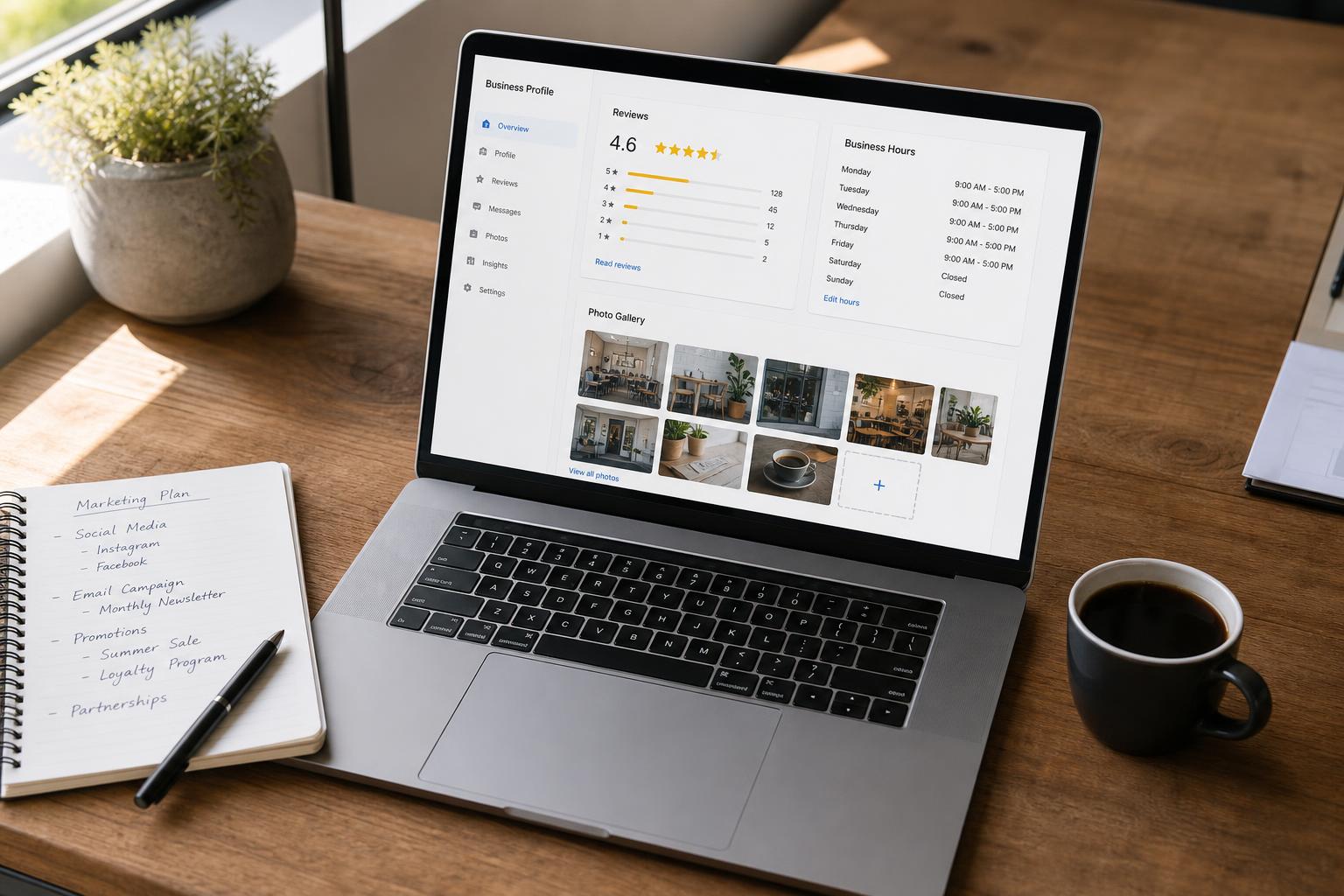
Overall completeness of a Google Business Profile ranked #16 in Whitespark's survey, a standalone factor separate from any individual field.2 The predefined services list jumped meaningfully this year after being underweighted in past editions — Google increasingly uses the structured services section, not just the description, to match a profile to specific searches. Photos, videos, real service descriptions, and a filled-out Q&A section all feed the same signal, and a profile claimed once and never revisited is missing most of it. See Google Business Profile optimization checklist for 2026 for a full field-by-field walkthrough.
On-Page Local Signals: What Your Website Still Needs to Do
Your website contributes its own on-page signals, scoring lower than the top GBP and review factors but compounding with them: city and service names in title tags, headings, and URLs where genuinely accurate; a location-specific landing page for each city or service area you actually serve, rather than one generic "service areas" list; and mobile-friendly, fast-loading pages with basic LocalBusiness schema markup.
Common Mistakes That Keep Businesses Out of the 3-Pack
A handful of avoidable mistakes account for most of the gap between businesses that rank and those that don't:
- Keyword-stuffing the business name. Adding a city or service term that isn't your real name violates Google's guidelines and risks suspension.
- Letting the primary category go stale. The highest-weighted factor in the dataset is easy to get wrong by never revisiting it.
- Treating reviews as a one-time push. A large historical count doesn't substitute for the sustained influx Whitespark scores separately.
- Ignoring NAP mismatches. An old suite number or disconnected phone line on even one directory hurts the ranking and trust signal at once.
- Hiding an address by default on a storefront business. Address visibility is a top-10 factor; hiding it makes sense only for service-area businesses.
Frequently Asked Questions
How long does it take to rank in the Google local 3-pack?
Google publishes no fixed timeline, and it varies by competition. Completeness, category accuracy, and NAP fixes can show movement within weeks; sustained review volume and citation consistency take months.
Do backlinks matter for local pack rankings?
Less than for general organic search. None of Whitespark's top 8 local pack factors are link-related — the highest-weighted signals are almost entirely profile and review factors. Links matter more for local organic rankings, a related but separate system.
Can I pay Google for a better local ranking?
No. Google states directly: "there's no way to request or pay for a better local ranking on Google."1 Local Services Ads and paid search results are separate, clearly labeled placements, not the organic 3-pack.
How many reviews do I actually need?
No official minimum, but consumer data gives a floor: 47% won't use a business with fewer than 20 reviews, and 68% require at least a 4-star average.3 Treat that as a baseline, since quantity and recency are both scored factors and a trust threshold.
Does hiding my address hurt my ranking?
It removes you from one of the top-10 scored factors, so yes. It's the correct setting for a service-area business with no public location, and a real cost for a storefront business that hides its address unnecessarily.
Key Takeaways and Next Steps
The Google Local 3-Pack isn't ranked on mystery signals — Google names the three factors directly, and Whitespark's expert-panel data shows which underlying signals carry the most weight. Category accuracy, address and proximity data, and review volume, recency, and rating account for most of the top of that list, ahead of the link-building tactics that dominate general organic SEO. Getting the boring parts right moves a listing further than most of what gets marketed as an advanced tactic.
This post is part of a growing series on local and organic visibility for small businesses — see local SEO for small business: the complete guide for the full picture, Google Business Profile optimization checklist for 2026 for a field-by-field walkthrough, or how reviews affect local rankings for the data behind the review signal specifically. If you want a second pair of eyes on your listings, talk to our team.
Want more like this in your inbox?
Occasional, practical marketing advice for local service businesses. No spam.
References (4)
- 1.Google / Google Business Profile Help — How local results are ranked (relevance, distance, prominence) and tips to improve local ranking, official Google documentation
- 2.Whitespark — 2026 Local Search Ranking Factors survey, n=47 local search experts scoring 187 factors, published November 2025
- 3.BrightLocal — Local Consumer Review Survey 2026, n=1,002 US adult consumers, SurveyMonkey panel, published February 2026
- 4.BrightLocal — Local Business Discovery & Trust Report, n=1,138 US consumers, surveyed September 2023 via SurveyMonkey consumer panel

Written by
Yash · Creative Specialist
Builds the creative and content that gets your business noticed.