Branding DesignAugust 6, 2026By Yash
Brand Consistency Across Google, Social, and Your Website: A Checklist
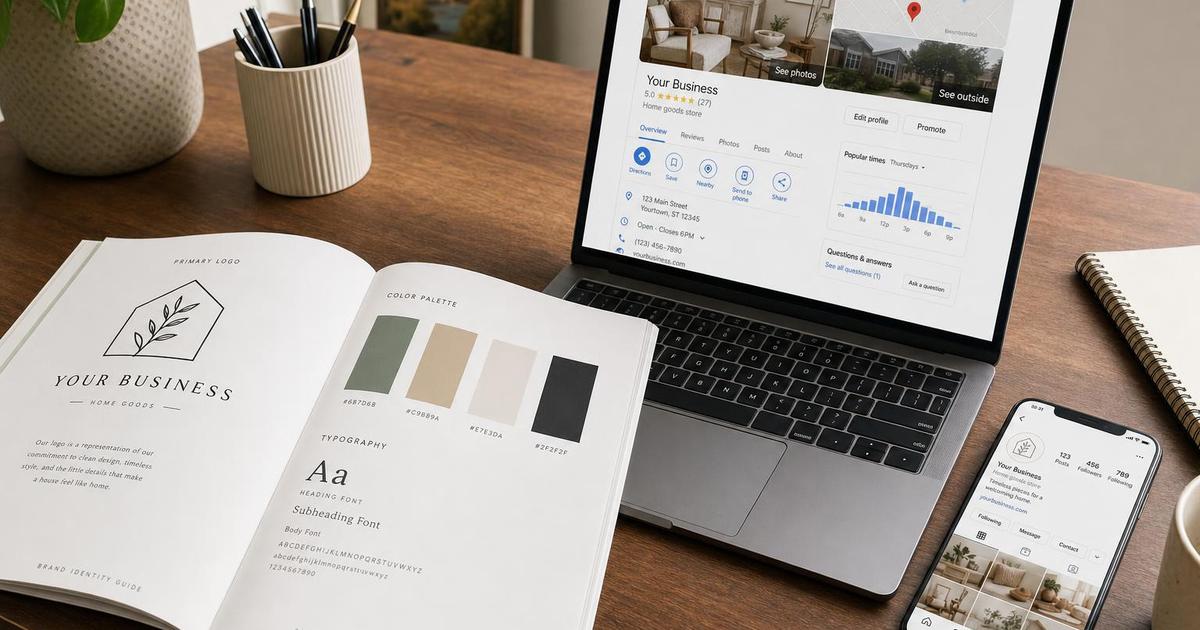
A customer sees your logo on Instagram, clicks through to a website in slightly different colors, then calls the phone number on your Google listing — and it's outdated. None of that is a single big mistake. It's three small ones, and together they're the difference between a business that looks handled and one that looks like nobody's minding it. Brand consistency isn't about having a beautiful logo; it's about making sure the same identity shows up correctly everywhere someone might run into your business.
This checklist covers what actually needs to match, why Google and your customers both notice when it doesn't, and how to audit what you already have without hiring a full rebrand.
Key Takeaways
- Companies that maintain consistent branding self-report revenue gains of up to 33%, per a survey of 400+ brand management professionals — a real, named finding, though a self-reported one, not audited financial data.1
- 98% of consumers say they notice when a familiar brand changes something, and 80% say brand consistency influences their purchasing decisions.2
- In Whitespark's 2026 Local Search Ranking Factors survey of 47 local search experts scoring 187 factors, your Google Business Profile's primary category is the single highest-weighted local pack ranking factor — and matching NAP (name, address, phone) data between your website and your GBP listing is a top-20 factor in its own right.3
- 62% of consumers say they'd avoid using a business if they found incorrect information about it online, and roughly 46% say an incorrect address specifically makes them lose trust in that business.4
- The checklist below covers nine specific things worth locking down: logo usage, color codes, typography, voice, your Google Business Profile, social bios, image style, email signatures, and invoice branding.
In this guide:
- What brand consistency actually means
- Does inconsistency hurt your Google rankings?
- The full checklist
- How to audit what you already have
- How often to update brand assets
- Do you need a formal style guide?
- FAQ
What Does Brand Consistency Actually Mean?
Brand consistency means the same logo, colors, typography, and voice show up the same way everywhere a customer encounters your business — your website, your Google Business Profile, your social profiles, your ads, and even a printed invoice. It's not about using your brand elements often; it's about using the exact same version of them every time, so recognition compounds instead of resetting with each new touchpoint.
In a survey of over 400 brand management professionals, companies that maintained consistent branding self-reported revenue gains of up to 33%.1 Worth a caveat: it's a self-reported estimate from marketers, not an audited financial result, and the same survey found a lower 23% figure in an earlier edition — real variance, not a fixed constant. Treat it as directional evidence that people close to the numbers believe consistency pays off.
Consumers back that belief up with their own reported behavior. In a survey on rebranding and consumer trust, 98% said they notice when a familiar brand changes something, and 80% said brand consistency influences their purchasing decisions.2 Inconsistency isn't invisible to the people you're trying to convert — it's one of the first things they register.
Does Inconsistent Business Information Actually Hurt Your Google Rankings?
Yes, on two fronts: what Google's algorithm rewards, and what customers do when they hit a wrong detail. This is the piece of brand consistency most checklists skip, because it's not about how your logo looks — it's about whether your business name, address, and phone number (commonly shortened to NAP) match across your website, your Google Business Profile, and every directory listing you appear on.
Whitespark's 2026 Local Search Ranking Factors survey — based on scores from 47 local search experts across 187 individual ranking factors, published November 2025 — found that your Google Business Profile's primary category is the single highest-weighted factor in local pack rankings.3 Matching NAP data between your website and your GBP listing ranks in the top 20 factors on its own. Pure citation-count strategies have declined in importance for classic rankings, the report notes, but three of the top five factors specific to AI search visibility are citation-related — NAP consistency matters as much for showing up in an AI-generated answer as it does for the traditional local pack.3
The customer-behavior side is just as direct. In BrightLocal's Local Business Discovery & Trust Report (n=1,138 US consumers, surveyed September 2023), 62% said they'd avoid using a business if they found incorrect information about it online.4 Broken down by error type, 46% said an incorrect address makes them lose trust, and 45% said the same about an incorrect phone number.4 A mismatched detail doesn't just cost a slightly lower map ranking — it costs the customer who found the mismatch.
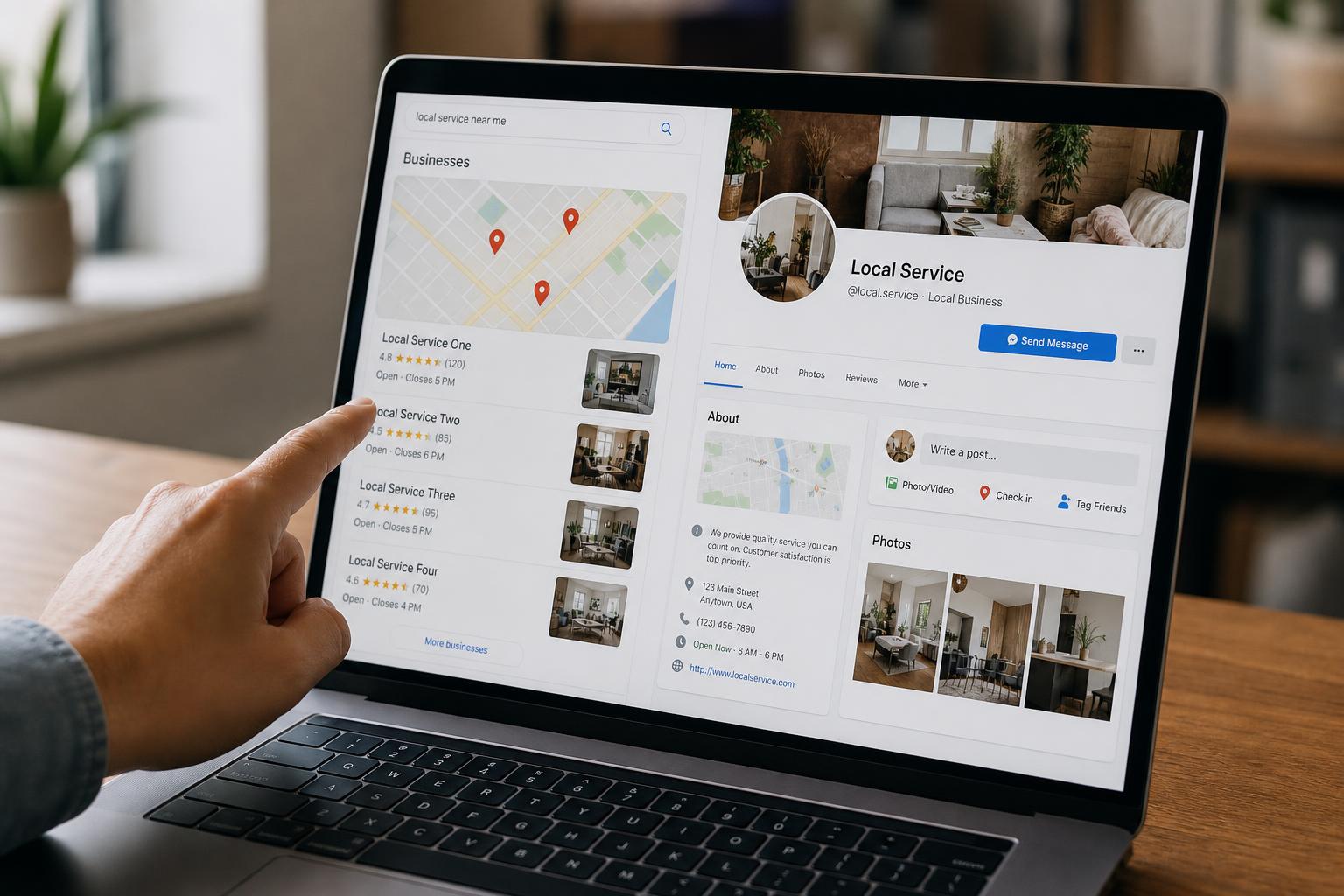
The Brand Consistency Checklist: What Needs to Match Everywhere
This is the practical part. Nine things are worth locking down and checking on a recurring basis, in roughly the order most businesses discover they've drifted.
| What to Standardize | Specifics to Lock Down | Where People Notice It's Off |
|---|---|---|
| Logo usage | Primary mark, an icon-only alternate, minimum clear space, and approved backgrounds | A cropped or stretched logo used as a social profile picture |
| Color palette | Exact hex, RGB, and CMYK codes for primary and secondary colors | A slightly different shade of blue on a social cover photo vs. the website |
| Typography | Heading font, body font, and an approved web-safe fallback | An ad using a different font than the landing page it links to |
| Voice and tone | 3-5 tone adjectives plus one do/don't example | Formal website copy next to casual, joke-heavy social captions |
| Google Business Profile (NAP) | Exact business name, address format, and phone number, matching your website footer character for character | An old suite number or a disconnected phone line still listed |
| Social bio and profile image | Same business name, same profile photo crop, same one-line description across every platform | An outdated logo crop as the profile picture on one platform only |
| Image style | Consistent lighting, color treatment, and framing across web, ads, and social photography | Bright, natural product photos on the website next to heavily filtered stock photos on social |
| Email signature | Logo, brand colors, and brand fonts, not a default email-client font | A signature in Times New Roman under a modern sans-serif brand identity |
| Invoices and quotes | Logo, brand color accents, and consistent formatting on every PDF template | A plain, unbranded invoice landing in an inbox right after a polished sales conversation |
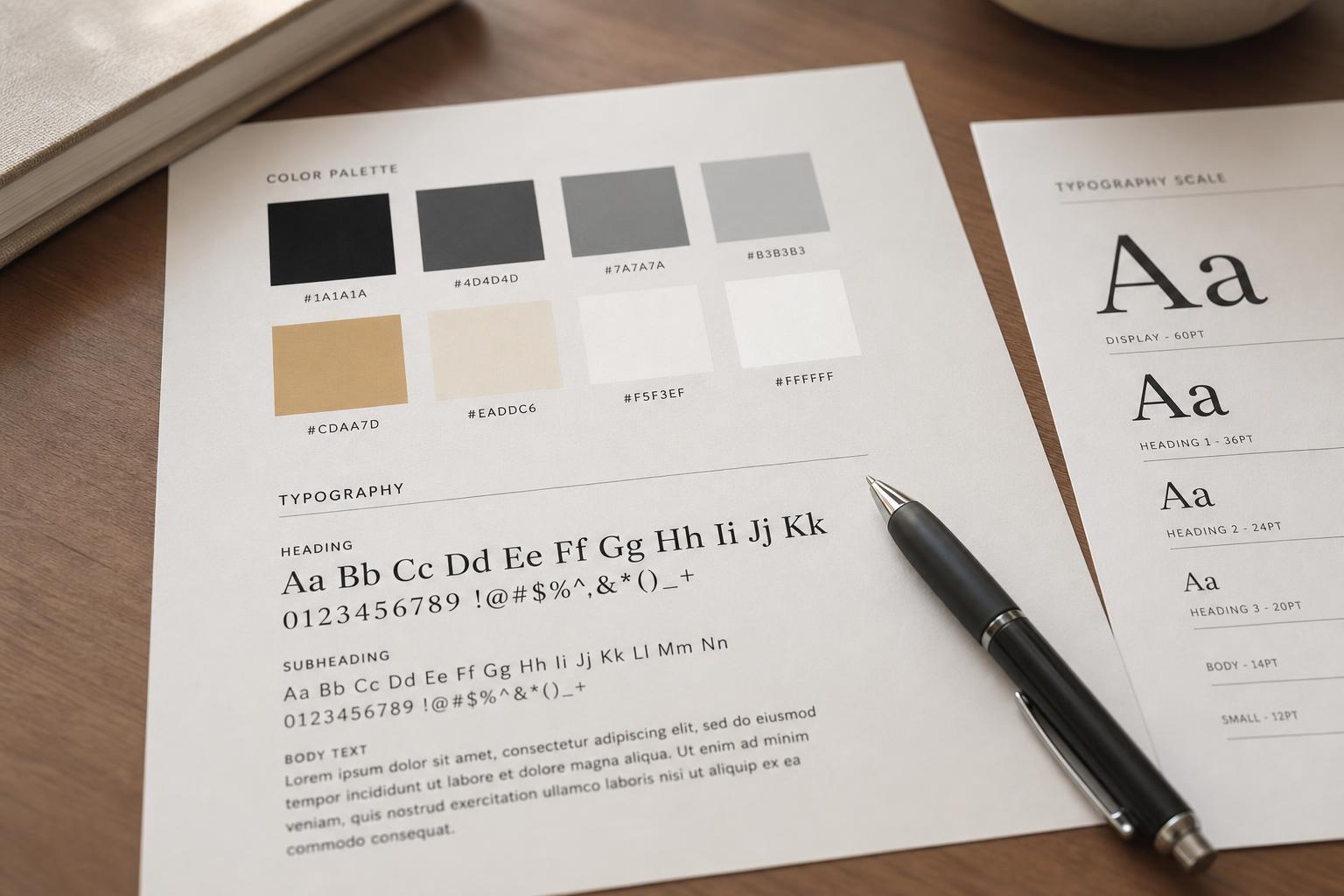
Two of these deserve a second look because they're the ones most small businesses haven't checked recently: the Google Business Profile and the invoice template. Both sit outside the "creative" work most people associate with branding, which is exactly why they drift first — nobody's job is explicitly to check them.
How Do I Audit My Current Brand Consistency?
Start by pulling up every place your business actually appears — not from memory, but by searching your business name and visiting each result. In one sitting, open your website, your Google Business Profile, every social platform you're active on, your last sent invoice, and your email signature, side by side.
Run each one against the checklist above and note anything that doesn't match exactly: a different logo crop, a color that's close but not identical, a phone number that's one digit off from your website. Small mismatches are the norm to find here, not the exception — that's the point of the audit. Pay particular attention to the Google Business Profile's name, address, and phone fields against your website footer, since that's the specific mismatch shown above to cost both rankings and customer trust. Fix the highest-visibility items first — your GBP and most-used social platform reach more people than your invoice template, so start there even though the invoice fix is usually faster.
How Often Should I Update Brand Assets Without Losing Consistency?
Rarely, and deliberately — not as a byproduct of a new hire picking their own fonts or a social manager trying a different filter for a week. 98% of consumers notice when a familiar brand changes something, and frequent, undeliberate changes reduce trust for 44% of them.2 That doesn't mean never touch your branding again — it means changes should happen on purpose, roll out everywhere at once, and get documented somewhere your team can reference, not drift in one platform at a time.
A useful rule of thumb: minor refinements (an updated photo style, a new template) can happen periodically; core identity elements (logo, primary colors, business name format) should change only for a real reason, and should roll out to every touchpoint in the same week rather than gradually.
Do I Need a Formal Style Guide as a Small Business?
Not a full agency-grade brand book, but yes to something written down. The minimum viable version is one page: your logo files, your hex codes, your two brand fonts, three to five words describing your tone, and your exact Google Business Profile name/address/phone as it should appear everywhere. That single page keeps a freelancer, a new hire, or your future self from quietly reinventing the brand each time something new gets made — without it, consistency depends entirely on memory, which is exactly how the mismatches in the checklist above happen in the first place.
Frequently Asked Questions
What's the single biggest brand consistency mistake small businesses make?
Letting the Google Business Profile drift out of sync with the website. It's the one touchpoint most business owners never think of as "branding," but it's also the one most directly tied to whether a customer trusts you enough to call, and to whether Google's local algorithm treats your listing as reliable.3,4
Does brand consistency matter if I only sell locally?
It matters more, not less. NAP consistency between your website and your Google Business Profile is specifically a local-search signal, and local customers are the ones most likely to cross-check your business across a search result, a map listing, and a social profile before ever visiting.3
How long does a full brand consistency audit take for a small business?
Usually one to two hours for a business with a website, a Google Business Profile, and two or three social platforms — most of that time is spent finding every place your business appears, not fixing what you find once it's laid out side by side.
Key Takeaways and Next Steps
Brand consistency isn't a design nicety — it's the reason a customer who sees your business in three different places recognizes it as the same business each time, and it's a measurable input into both local search rankings and purchase decisions. The checklist above covers the nine places small businesses most often let it slip, and the Google Business Profile and NAP-matching items are worth checking first, since they're the ones tied most directly to what Google and customers both notice.
This is part of a growing series on branding for small business — see branding for small business: design as a growth channel for the fuller case on what consistent branding does for trust and conversion, or branding vs. marketing: what's the difference and why businesses confuse them if you're still sorting out where branding ends and marketing begins. If you're mid-rebrand, rebranding a small business without losing existing customers covers the sequencing that keeps this checklist from breaking during the transition; if it's your website specifically that's inconsistent, 10 website design elements every small business site needs covers that ground. Subscribe below to get each new post in this series as it publishes, or get in touch if you'd rather have your current brand consistency reviewed directly.
Want more like this in your inbox?
Occasional, practical marketing advice for local service businesses. No spam.
References (4)
- 1.Lucidpress / Marq — The State of Brand Consistency report, 400+ brand management professionals
- 2.Clutch — Rebrand and consumer trust report, widely republished via BusinessWire, Nov 2025
- 3.Whitespark — 2026 Local Search Ranking Factors report, n=47 local search experts scoring 187 factors, published Nov 2025
- 4.BrightLocal — Local Business Discovery & Trust Report 2023, n=1,138 US consumers, surveyed Sept 2023 via SurveyMonkey consumer panel

Written by
Yash · Creative Specialist
Builds the creative and content that gets your business noticed.