Branding DesignAugust 4, 2026By Yash
Branding vs. Marketing: What's the Difference and Why Businesses Confuse Them

Ask a small business owner what their "branding" is and a lot of them will describe their Instagram ads. Ask what their "marketing" is and some will describe their logo. The two words get used interchangeably constantly, but they're not the same thing, and mixing them up has a real cost: businesses that skip branding and jump straight to marketing end up promoting an identity that isn't actually built yet.
This guide gives the clear, sourced version of the distinction, why the confusion happens in the first place, and what it costs a business that never sorts it out. For the fuller picture of what branding does for a business's bottom line, see branding for small business: design as a growth channel.
Key Takeaways
- Branding is your identity — name, logo, colors, voice. Marketing is the set of activities that promotes what you sell using that identity, per the American Marketing Association's own definitions.1,2
- In a survey of small business owners, a third named "marketing or branding their business" as their single biggest challenge — evidence the two get bundled together as one undifferentiated problem, not solved separately.3
- 98% of consumers say they notice when a familiar brand changes something, and 44% say frequent changes reduce their trust in that brand — branding is the thing marketing has to stay consistent with, not a one-time setup step.4
- Skipping branding doesn't save time. It just means every marketing dollar spent afterward is promoting an identity that isn't actually decided yet.
What Is Branding?
Branding is a business's identity system: its name, logo, color palette, typography, tone of voice, and the way all of those elements show up consistently everywhere a customer encounters the business. The American Marketing Association defines a brand as "any distinctive feature like a name, term, design, or symbol that identifies goods or services" (American Marketing Association, "Branding").1 Branding is the work of deciding and maintaining that identity — it answers "who are we, and how do we want to be recognized?"
Branding isn't a single deliverable. A logo is one output of a branding process, not the process itself. A real brand system also includes the color palette and typography that support the logo, a defined tone of voice for how the business writes and speaks, and a style guide documenting how all of it gets applied — so a new hire, a freelancer, or a new platform doesn't quietly drift the identity off in its own direction.

What Is Marketing?
Marketing is the activity of promoting what a business sells, using the identity branding establishes. The American Marketing Association's formal definition: "the activity, set of institutions, and processes for creating, communicating, delivering, and exchanging offerings that have value for customers, clients, partners, and society at large" (American Marketing Association, "The Definition of Marketing").2 In practice, for a small business, that means paid ads, content, email campaigns, SEO, social posts, and outreach — the channels covered across the small business lead generation playbook.
Marketing answers a different question than branding does: not "who are we," but "how do people find out, and why should they act now?" A marketing campaign can be excellent — sharp targeting, a strong offer, good creative — and still underperform if the identity behind it hasn't been decided, because the campaign has nothing consistent to reinforce.
Branding vs. Marketing: The Core Difference
The cleanest way to hold the two apart: branding is identity, marketing is promotion. Branding is built once and maintained continuously. Marketing runs in campaigns, with a start and an end. Branding answers "who are we." Marketing answers "why should you act now." A business can change its marketing weekly — a new offer, a new ad angle, a seasonal promotion — without touching its branding at all. Changing branding, by contrast, should be rare and deliberate, because every change resets some of the recognition the business has already built.
| Question | Branding | Marketing |
|---|---|---|
| What is it? | The identity system — name, logo, colors, voice | The activities that promote what you sell using that identity |
| Core question it answers | Who are we? | Why should you act now? |
| How often it changes | Rarely, and deliberately | Constantly — campaign to campaign |
| Timeframe | Ongoing, maintained continuously | Runs in campaigns with a start and an end |
| Examples | Logo, color palette, typography, tone of voice, style guide | Paid ads, email campaigns, SEO content, social posts, outreach |
| Cost of getting it wrong | Every future campaign has less to build recognition on | A single campaign underperforms, but the identity is unaffected |
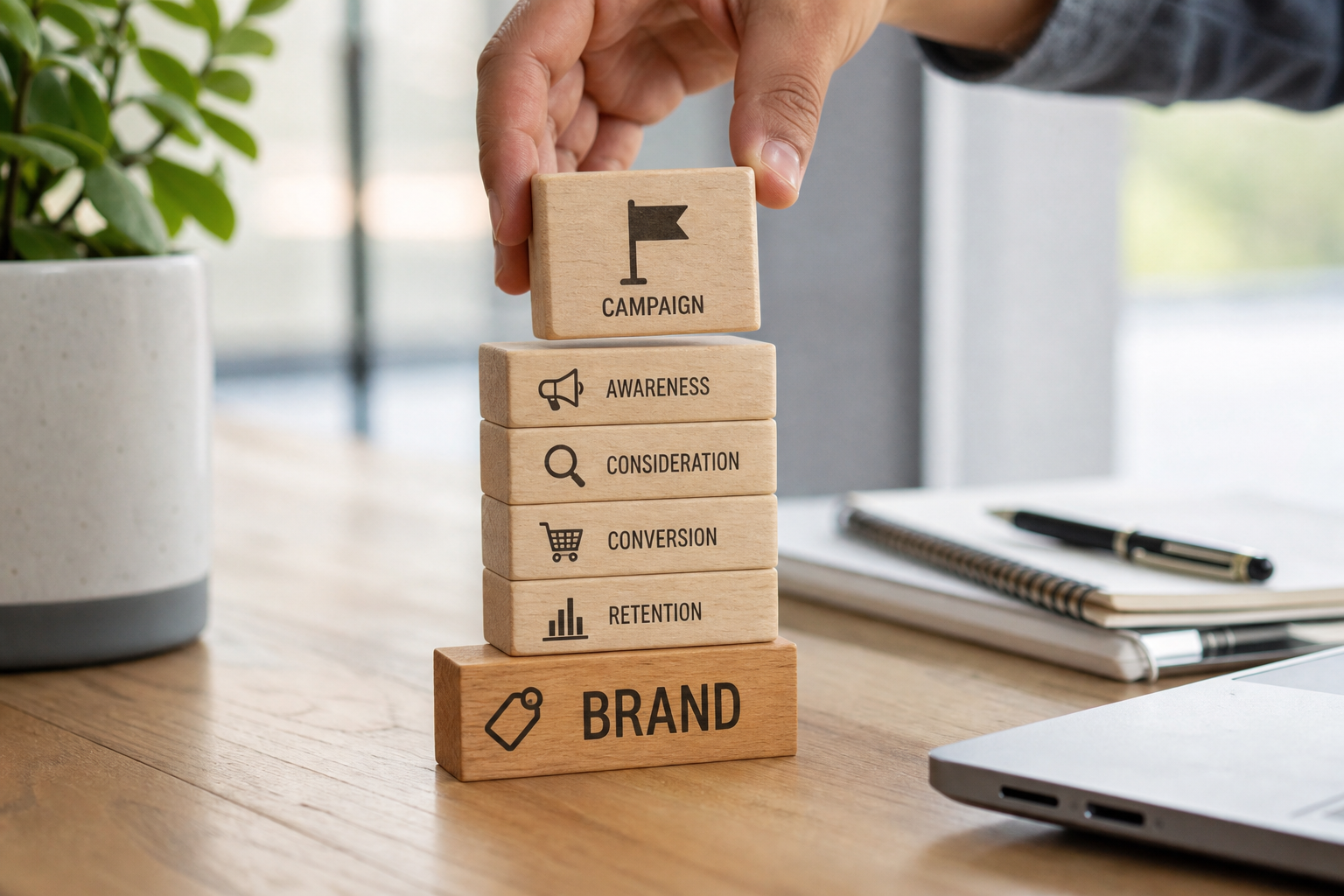
Think of it as foundation and activity. Branding is the foundation a business builds once and keeps consistent. Marketing is the ongoing activity that runs on top of that foundation, campaign after campaign. A business with strong marketing and weak branding is running loud, inconsistent campaigns that never quite stick in a customer's memory. A business with strong branding and no marketing is a business nobody's heard of yet. Both pieces have to be working for either one to pay off.
Why Small Businesses Confuse the Two
The confusion isn't really a knowledge gap — it's that both words describe things a small business owner has to think about at the exact same time, usually with no dedicated marketing hire to keep them conceptually separate. In a survey of small business owners, a third named "marketing or branding their business" as their single biggest challenge, and nearly 40% said they feel overwhelmed by it (The UPS Store, "Make Marketing Manageable").3 Worth noting: that survey names the two challenges together rather than measuring conceptual confusion directly, and it's now a decade old — but the framing itself is telling. When a business owner is wearing every hat, "make people notice us" and "decide who we are" collapse into a single overwhelming task instead of two sequential ones.
There's also a visibility bias at work: marketing is what customers see first — the ad, the post, the email — while branding is the quieter groundwork underneath it. It's natural to name the visible thing when asked what a business "does" for growth, even when the invisible foundation is doing just as much work.
What Happens When a Business Skips Branding and Jumps Straight to Marketing
Skipping straight to marketing doesn't save the time branding would have taken — it just moves the cost downstream, and compounds it. A few consequences show up repeatedly:
- Every campaign starts from zero. Without a consistent identity, each new ad or post has to work harder to build trust and recognition on its own, instead of borrowing credibility from a brand people already recognize.
- Inconsistency quietly erodes trust. 98% of consumers say they notice when a familiar brand changes something — a logo, a color, a tone — and 44% say frequent, undeliberate changes reduce their trust in that brand (Clutch, rebrand and consumer trust report, Nov 2025).4 A business without a defined identity isn't making deliberate changes; it's drifting, which reads the same way to a customer.
- Rebrand costs multiply later. Fixing an inconsistent identity after a business has already run months of campaigns on it costs more than deciding it upfront, since every existing customer touchpoint — website, ads, packaging, social profiles — has to be updated at once instead of built correctly the first time.
How Branding and Marketing Work Together
The two aren't in competition — they're sequential, then parallel. Branding comes first, even if it's a lightweight version at the start: a name, a simple logo, a couple of brand colors, and a one-line description of who the business serves. That's enough foundation for marketing to build on. From there, branding and marketing run in parallel: marketing campaigns keep launching and changing, while branding stays a stable, occasionally-refined constant underneath them, so each new campaign compounds recognition instead of resetting it.
Frequently Asked Questions
Is a logo the same thing as branding?
No. A logo is one visible piece of a brand system, not the whole system. Branding also includes the color palette, typography, tone of voice, and the consistency of how all of it gets applied — a logo alone, with nothing else defined, isn't a complete brand. For what the research actually shows about a logo's effect on trust and sales specifically, see does a professional logo actually increase sales?
Do I need to finish my branding before I start marketing?
Not entirely, but you need the basics locked down first: a name, a simple visual identity, and a clear sense of who you're talking to. Running expensive marketing campaigns on top of an identity that's still changing means redoing work later and diluting the recognition you're trying to build.
Which comes first, branding or marketing, for a brand-new business?
Branding, even in a lightweight form. It doesn't need to be a full agency engagement — a name, logo, color palette, and a short description of the business is enough to give marketing something consistent to promote. See branding for small business: design as a growth channel for what that foundation should actually include and what it costs at different budget levels.
Can a business have good marketing but bad branding?
Yes, and it's a common pattern: sharp ad targeting and strong offers, running on an inconsistent or unfinished identity. The campaigns can still generate short-term results, but they build less lasting recognition than the same spend would on a consistent brand, since each one is starting the trust-building process over.
Key Takeaways
Branding and marketing solve different problems: one decides who a business is, the other tells people about it. Confusing them isn't a knowledge failure so much as a natural result of doing both jobs at once with no dedicated hire to keep them separate — but the cost of staying confused is real, since every marketing dollar spent without a settled identity behind it does less than it could. Get the identity right first, even in a simple form, and every campaign after it compounds instead of starting over.
For the full case on why branding measurably affects trust and conversion — not just recognition — see branding for small business: design as a growth channel. If you're weighing whether to build that identity yourself, see DIY branding vs. hiring a designer. Once the identity is settled, brand consistency across Google, social, and your website covers keeping it the same everywhere, and rebranding a small business without losing existing customers covers what to do if the identity itself needs to change later. Subscribe below to get each new post in this series as it publishes, or get in touch if you'd rather talk through your specific brand and marketing setup directly.
Want more like this in your inbox?
Occasional, practical marketing advice for local service businesses. No spam.
References (4)
- 1.American Marketing Association — "Branding" topic definition page
- 2.American Marketing Association — "The Definition of Marketing," reviewed and reapproved periodically
- 3.The UPS Store — "Make Marketing Manageable" survey press release, Aug 2016
- 4.Clutch — Rebrand and consumer trust report, widely republished via BusinessWire, Nov 2025

Written by
Yash · Creative Specialist
Builds the creative and content that gets your business noticed.