
Most local SEO advice online is written for a US business, then relabeled for the UK by swapping "zip code" for "postcode" and calling it done. That's not enough. A UK small business runs on a different set of citation directories, a different address format inside Google Business Profile, and a genuinely different regulatory rule around requesting reviews by email — none of which a generic guide covers. This guide sticks to what's actually different, not what's identical to the US playbook.
Key Takeaways
- Whitespark's UK citation research confirms Yell, Thomson Local, Scoot, FreeIndex, Cylex UK, 192.com, and Yelp UK are all still active citation sources worth claiming.1
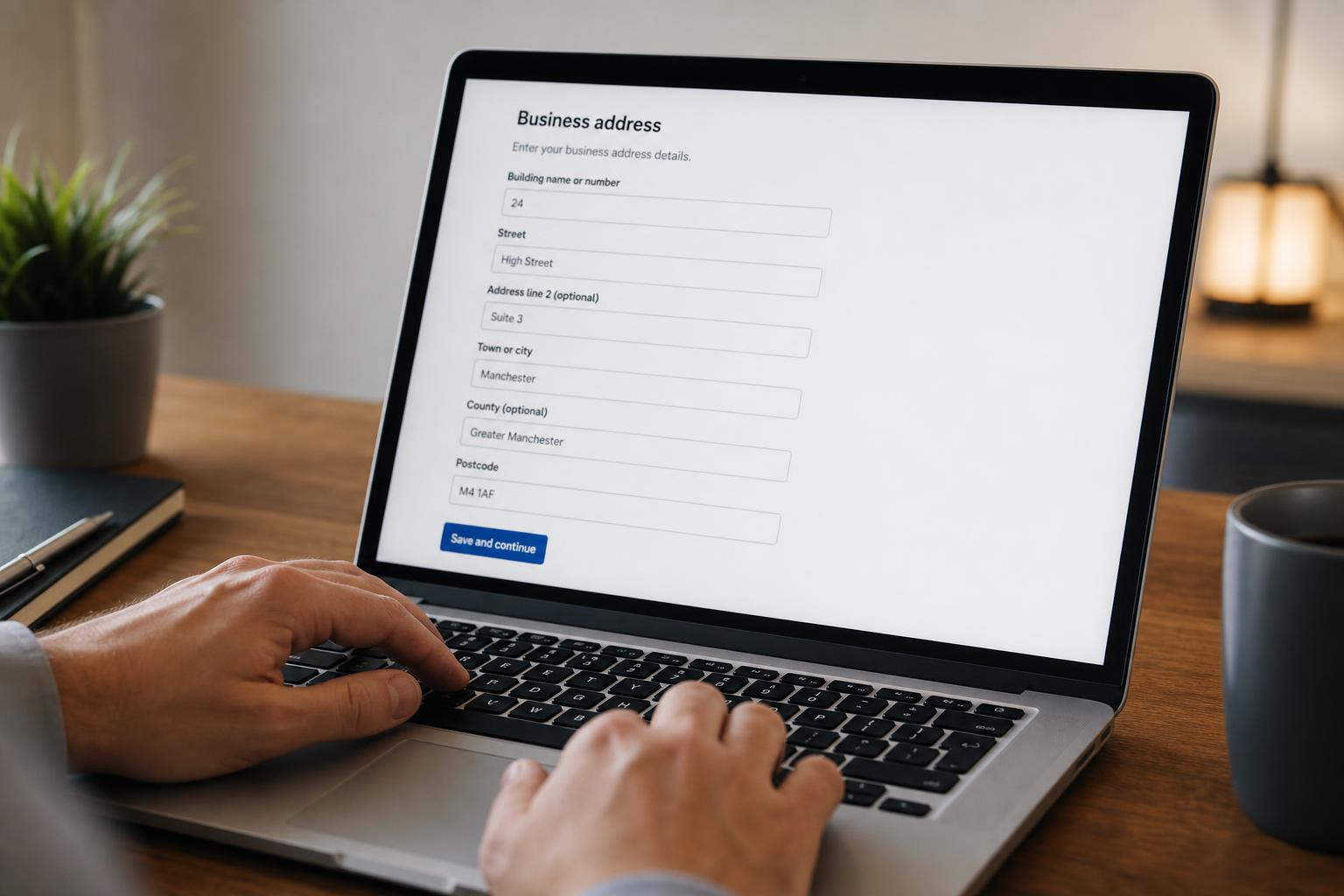
- UK Google Business Profile addresses follow Royal Mail's format (building number, street, town, county, postcode) with no "state" or ZIP field, and service areas can be set by postcode.2,3
- Review-request emails to past customers fall under PECR, not a vague "GDPR consent" rule — the soft opt-in exception permits it without fresh consent if you provide an opt-out.4,5
- A business's Companies House-registered address can silently leak into UK directory listings and create a NAP mismatch with no real US equivalent.6
- 82% of UK online adults use Google Search monthly, and 77% of UK adults' online time is spent on a smartphone.7
In this guide:
- UK citation directories that are actually still worth claiming
- Google Business Profile: what's different in the UK
- Requesting reviews in the UK: the PECR rule, not just "GDPR"
- Companies House and the NAP-consistency trap
- Pricing local SEO work in GBP
- What UK search behaviour actually looks like
- A UK local SEO starting checklist
- FAQ
UK Citation Directories That Are Actually Still Worth Claiming
A "citation" is any listing of your business's name, address, and phone number (NAP) on a directory site — search engines use consistency across those listings as a trust signal. The directories that matter for that signal in the UK aren't the ones a US guide tells you to claim.
Whitespark's dedicated UK citation research confirms the following are genuinely active, general-purpose UK directories: Yell.com, Thomson Local, Scoot.co.uk, FreeIndex.co.uk, Cylex-UK.co.uk, 192.com, Yelp.co.uk, TouchLocal.com, HotFrog.co.uk, Fyple.co.uk, plus the official platform listings — Google Business Profile, Bing Places, and Apple Maps (Whitespark, The 30 Best Local Business Listing Directories in the UK).1 That's a materially different core list than the US equivalent, which centers on Yelp, the Better Business Bureau, and Angi — none of which carry the same weight in the UK.
For trades and home-service businesses, Checkatrade functions as a vetted trades-review platform the way Angi does in the US, and Trustpilot is a general review aggregator with strong UK usage. Neither appears on Whitespark's core NAP-citation list, but both are worth claiming if they fit your trade.
One caution: Whitespark's global 2026 Local Search Ranking Factors survey (47 experts, 187 factors) doesn't break out UK-specific ranking weights (Whitespark, 2026 Local Search Ranking Factors).8 No tier-1 source shows citations carrying different weight in UK rankings versus US rankings — the difference is which directories exist, not how heavily the algorithm favors citations generally.

Google Business Profile: What's Different in the UK
The platform is the same product worldwide, but two mechanical details genuinely change for a UK listing.
Address format. Google's own UK support documentation specifies that GBP addresses follow the standard UK order — building or house number, street, town or city, county, postcode — matched to Royal Mail's address database, using Royal Mail's postcode finder to check before submitting (Google Business Profile Help, Manage your business address).2 There's no "state" field and no ZIP code; the postcode does that job inside a different field order, and getting it wrong is a common reason a UK listing lands in suspended review.
Service-area definition. For businesses that go to the customer (plumbers, mobile groomers, cleaners), GBP lets UK businesses define their service area by postcode district rather than the radius-around-a-pin approach more common in US listings (Google Business Profile Help, Manage your service areas).3
Neither changes the underlying strategy — complete every field, pick accurate categories, post updates, respond to reviews — covered in our Google Business Profile optimization checklist. What changes is the fields themselves and the format Google expects.
Requesting Reviews in the UK: The PECR Rule, Not Just "GDPR"
This is the section most US-written local SEO content skips entirely, and it's worth getting precisely right rather than vaguely alarming.
The regulation that actually governs emailing or texting a customer to ask for a review isn't a generic "GDPR requires consent" rule — it's the Privacy and Electronic Communications Regulations (PECR), specifically the rules on electronic mail marketing. Under PECR Regulation 22, sending marketing by email or text to an individual generally requires consent, and a review request counts as electronic marketing under this rule even though it doesn't feel like a sales pitch (Information Commissioner's Office, Electronic and telephone marketing).4
The detail that actually matters for review requests is the soft opt-in exception. The ICO's own guidance confirms a business can email or text an existing customer about its own similar products or services — which reasonably covers a review request — without fresh, explicit consent, provided: the business collected the customer's contact details directly during a sale, the message concerns products or services similar to what the customer bought, the customer had a clear chance to opt out when their details were collected, and every message includes a straightforward opt-out (Information Commissioner's Office, Electronic mail marketing).5
In practice: a plumber emailing the customer whose details came from a job just completed, asking for a review, with an unsubscribe link included, is on solid ground under the soft opt-in. The same plumber emailing a purchased list of local homeowners who've never used the business is not. There's no local-SEO-specific "review law" in the UK — PECR's general electronic-marketing rule is simply the one that applies, and it's not something a US-based business ever has to think about in this form.
Companies House and the NAP-Consistency Trap
Companies House is the UK government's registrar of companies — every limited company and LLP has a public record there, including a registered office address. That's a UK-specific fact with no real US equivalent, and it creates a citation problem worth watching for.
Since 18 November 2025, Companies House has also required identity verification for directors and people with significant control, adding a formal identity layer to that public registry (Companies House, Why identity verification is good for business).6 That doesn't touch local SEO directly, but it underscores Companies House data is treated as an authoritative business record — which is why it matters for citation consistency.
Here's the trap: many UK business owners register using an accountant's or formation agent's address rather than their actual trading address, since that's simpler at incorporation. Some UK directories pull address data from Companies House when building or verifying listings, so a registered office that differs from your trading address can quietly propagate into directory listings — creating the kind of NAP inconsistency that undermines the citation work above. This is a practitioner-level operational risk, not a documented Google ranking factor, but it's a genuinely UK-specific thing to check: confirm your Companies House-listed address matches your trading address, or at minimum, know which one is showing up in the directories that matter to you.
Pricing Local SEO Work in GBP
If you're budgeting for citation cleanup, GBP optimization, or ongoing local SEO management, price it in pounds against UK market rates rather than converting a US dollar figure. UK freelancers typically charge £50-£500 a month for ongoing SEO work, while agencies typically run £500-£5,000+ a month depending on scope and competitiveness (LOCALiQ, How much does SEO cost in the UK?, May 2026).9 Local SEO specifically — as opposed to a full national SEO campaign — tends to sit toward the lower end of that agency range for a single-location small business, since the scope (one GBP listing, a defined set of local citations, one geographic area) is narrower than a multi-location or national campaign.
| Provider Type | Typical Monthly Cost | Best Fit |
|---|---|---|
| Freelancer | £50-£500 | Single location, limited budget |
| Agency | £500-£5,000+ | Ongoing management, scaling with locations and competitiveness |
Where you land in the agency range depends heavily on how many locations you have and how narrow the scope is — a single-location citation and GBP cleanup costs far less than an ongoing multi-location campaign in a competitive market.9
What UK Search Behaviour Actually Looks Like
UK search is dominated by Google and increasingly mobile, which shapes how a local listing needs to perform on a phone screen. Google Search is used by 82% of UK online adults monthly, adding up to roughly 3 billion Google searches a month in the UK, and about 30% of those searches now surface an AI Overview, seen by 53% of UK adults (Ofcom, From apps to AI search: how the UK goes online in 2025).7 The same report finds 77% of UK adults' total time online happens on a smartphone — the practical reason a GBP listing with a wrong phone number or a mismatched map pin costs more than it used to: a mobile searcher acting on bad information is looking for the nearest option, not doing further research. This is general UK internet-behavior data, not a "local search" statistic specifically, but it's the most current UK-specific tier-1 evidence available, and the mobile-dominant pattern is exactly why address accuracy matters this much.
A UK Local SEO Starting Checklist
- Complete your Google Business Profile using the UK address format, matched exactly to Royal Mail's database
- Set service-area coverage by postcode district if you're a mobile or service-area business
- Claim and align NAP data across Yell, Thomson Local, Scoot, FreeIndex, Cylex UK, 192.com, and Yelp UK, plus Checkatrade and Trustpilot if your trade fits
- Confirm your Companies House-registered address matches your trading address
- Build review-request emails around the PECR soft opt-in: past customers only, with a clear opt-out every time
- Check your listing on mobile, since most UK searchers are finding you on a phone
Each item here is the UK-specific version of a step covered in more general depth in our complete guide to local SEO for small business, which is the place to start for the fundamentals this post assumes you already know. Running the same playbook in more than one market? Local SEO for small business in Canada covers the equivalent regional differences north of the US border — a different set of gaps than the ones covered here.
Frequently Asked Questions
Do I need to worry about GDPR to ask customers for reviews in the UK?
Not GDPR broadly — the rule that applies is PECR, which governs email and text marketing. Its soft opt-in exception generally lets you email or text a past customer for a review without fresh consent, as long as you collected their details directly during a sale and include an opt-out.4,5
Which UK business directories should I actually bother claiming?
Yell, Thomson Local, Scoot, FreeIndex, Cylex UK, 192.com, and Yelp UK are all confirmed still active per Whitespark's UK citation research, alongside Google Business Profile, Bing Places, and Apple Maps.1 Checkatrade and Trustpilot are worth adding for trades businesses.
Is Google Business Profile actually different in the UK, or just the address labels?
The product and ranking mechanics are the same worldwide. What differs is the address field structure — building number, street, town, county, postcode, no "state" field — and that UK service-area businesses can target by postcode district instead of a mileage radius.2,3
Does my Companies House registration affect my local SEO?
Not as a documented ranking factor, but it's worth checking: if your registered address (often an accountant's, not your trading address) differs from where you operate, that mismatch can leak into directory listings and create NAP inconsistency.6
Key Takeaways and Next Steps
The mechanics of local SEO — complete your profile, build consistent citations, earn reviews — are the same everywhere. What changes for a UK small business is which directories those citations live on, the specific address fields Google Business Profile expects, and the regulation that governs how you can legally ask for a review. Get those three things right and the rest of local SEO works the same way it does anywhere else.
This is one post in a growing series on local and organic visibility for small business. It also includes our complete guide to local SEO for small business, local SEO for small business in Canada, and local SEO for small business in Australia, with more regional and tactical guides on the way. If you'd rather have someone else sort out your citations and Google Business Profile from scratch, get in touch.
Want more like this in your inbox?
Occasional, practical marketing advice for local service businesses. No spam.
References (9)
- 1.Whitespark — The 30 Best Local Business Listing Directories (Citations) in the U.K.
- 2.Google Business Profile Help — Manage your business address, en-GB support documentation
- 3.Google Business Profile Help — Manage your service areas, en-GB support documentation
- 4.Information Commissioner's Office (ICO) — Electronic and telephone marketing, PECR guidance
- 5.Information Commissioner's Office (ICO) — Electronic mail marketing, soft opt-in guidance
- 6.Companies House — Why identity verification is good for business, gov.uk, Sep 2025
- 7.Ofcom — From apps to AI search: how the UK goes online in 2025, published Dec 2025
- 8.Whitespark — 2026 Local Search Ranking Factors, 47 local SEO experts, 187 factors
- 9.LOCALiQ — How much does SEO cost in the UK? A 2026 pricing guide, published May 2026

Written by
Yash · Creative Specialist
Builds the creative and content that gets your business noticed.