Lead Capture TechnologyAugust 7, 2026By Yash
Call Tracking Explained: What It Shows You That Ad Platform Reporting Doesn't
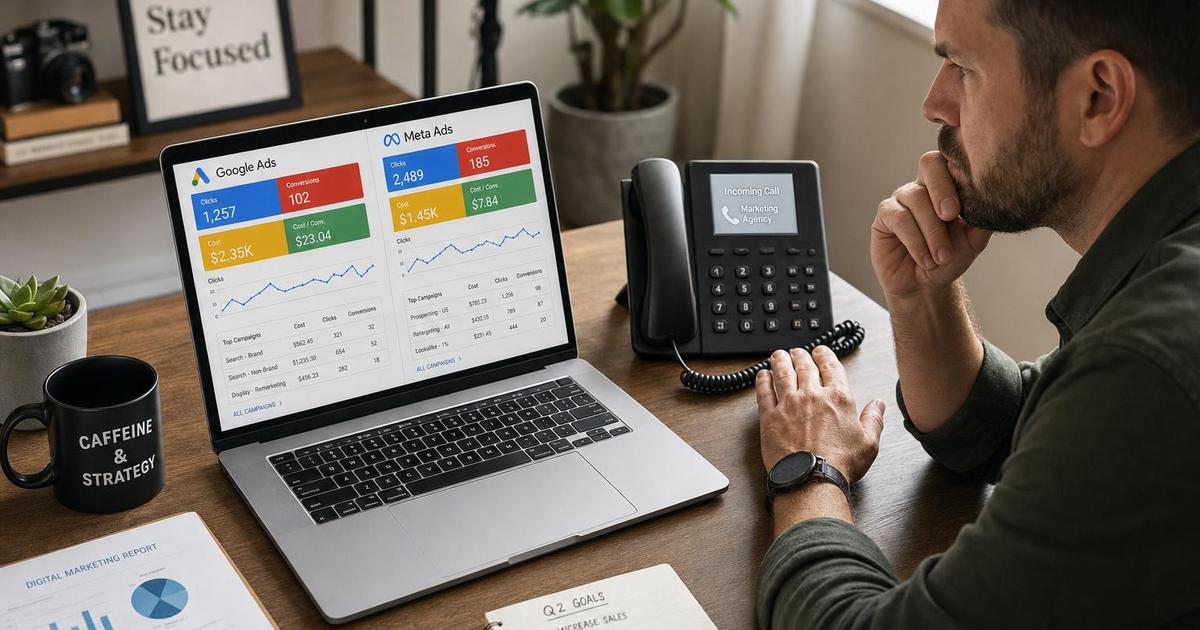
You're running Google Ads, maybe Meta Ads too, and the phone rings. Somewhere in that stack of campaigns, ad groups, and keywords, one of them is responsible for that call — but your ads dashboard has no idea which one. It shows you clicks, impressions, and a "conversion" if someone tapped a call button. It does not show you that the call lasted eleven seconds before the caller hung up, or that nobody answered it at all.
That gap is the whole problem with judging ad performance from ad platform reporting alone when phone calls are involved. This guide covers what call tracking data actually reveals that Google Ads and Meta Ads reporting can't, why that gap is getting wider in 2026, and why it's a better fit as something you have set up and managed than something you configure yourself and hope stays accurate.
Key Takeaways
- Ad platforms report a phone "conversion" the moment someone taps a call button — not whether the call was answered, how long it lasted, or whether it turned into a real lead.
- In Invoca's 2026 analysis of 70 million phone calls, 56% of callers reached a live person, 38% of those answered calls became leads, and 42% of those leads converted during the call itself — layers of outcome data no ad platform captures.1
- Phone calls convert to revenue 10-15x more often than web-form leads, according to BIA/Kelsey research cited by Invoca, which makes it more costly, not less, to have no visibility into which campaigns generate them.2
- Google's ad_storage privacy change, effective June 15, 2026, further weakens ad-platform-side call attribution whenever a visitor denies cookie consent, making a separate, first-party call data source more relevant, not less.3
- Alphalead's Growth plan includes call tracking as part of its automation ("email, SMS & call tracking"), and Ultimate bundles it with weekly Google Business Profile tracking — set up and monitored as part of the plan rather than a tool you configure yourself.4
In this guide:
- What ad platform reporting actually shows you
- What call tracking data reveals that ad platforms don't
- Why a 12-second hang-up and a 6-minute call look identical in Ads Manager
- Why this compounds once you're running more than one channel
- Why this works better as a managed line item
- How call tracking fits into a bigger lead system
- FAQ
What Ad Platform Reporting Actually Shows You (and Where It Stops)
Google Ads and Meta Ads report a phone "conversion" when someone taps a call extension, a click-to-call button, or a call-only ad — the click itself, not what happened on the call afterward. Some businesses import offline conversions manually, but that requires someone to mark which calls counted, exactly the kind of ongoing manual work most small businesses don't have time to keep current.
What the platform's dashboard cannot tell you: whether the phone was actually picked up, how long the conversation ran, what was discussed, or whether it turned into a booked job. A tap on a call button and a ten-minute conversation that ends in a signed estimate both register the same way — one conversion, indistinguishable on the reporting screen.
That gap is getting harder to close, not easier. On June 15, 2026, Google shifted to making ad_storage cookie consent the sole authority over whether a call can be linked back to the ad someone clicked. When a visitor denies that consent, Google Ads can no longer connect their later phone call to the campaign that drove it — the call still happens, but the platform has no way to credit it to anything (Invoca, published June 4, 2026).3 Businesses running call-driven Google Ads campaigns — click-to-call, call extensions, call-only ads — are the most exposed, and the practical effect is more conversions landing in the "unknown source" bucket over time, not fewer.
What Call Tracking Data Actually Reveals
Call tracking exists specifically to fill the gap ad platform reporting leaves open. It doesn't replace your ads dashboard — it sits alongside it and answers three questions the ads dashboard can't.
Call source attribution
Call tracking assigns a distinct tracked phone number to each channel, campaign, or keyword a visitor might have come from — a technique generally called dynamic number insertion. When someone calls one of those numbers, the system already knows which ad, page, or channel it was displayed on, independent of whether the visitor's browser allowed a tracking cookie. That's the structural advantage over platform-side attribution: it doesn't depend on the same consent signal Google's June 2026 change made less reliable, because the number itself, not a cookie, does the attributing.
Call duration and quality signals
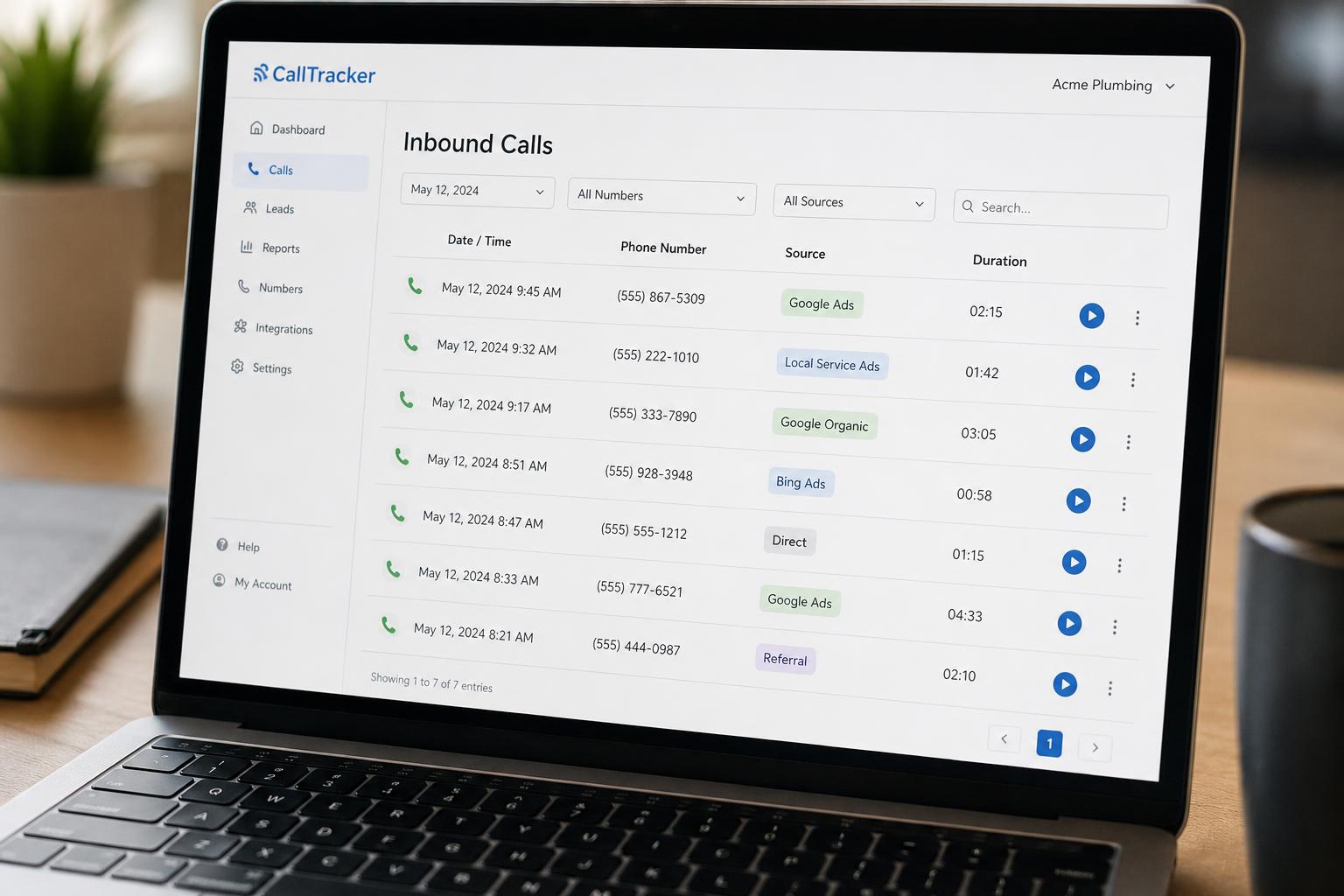
A call's length is one of the simplest, most useful quality signals available, and it's invisible in ad platform reporting entirely. Invoca's 2026 analysis of over 70 million calls and 600 million minutes of conversation found that longer calls correlate directly with better outcomes: calls lasting more than 15 seconds get answered 65% of the time, and calls past 30 seconds get answered 71% of the time — a meaningful difference from short, quickly-abandoned calls that never get past a ring (Invoca, July 2026 report).1 The same analysis found 56% of callers reach a live person, 38% of those answered calls turn into a genuine sales lead, and 42% of those leads convert on the call itself.1 None of that layered detail — answered or not, how long, what stage it reached — shows up as anything more than a single "conversion" tick in Google Ads or Meta Ads. Call recordings and transcripts, where enabled and compliant with local consent rules, add a further layer on top: what was actually said, not just how long it took.
Missed vs. answered call visibility
An ad platform has no way to know if your phone was ever picked up — a call-only ad reports the same "conversion" whether the call rang through to a person or rang out entirely. Call tracking records the outcome of every call regardless of what the ad platform can see, which matters because a missed call from a paid campaign is a wasted media dollar in a way a missed organic call isn't quite as costly. If missed calls are a recurring pattern in your data, the missed-call text-back guide covers what actually recovers those leads once you can see them, and reading your full funnel from first ring to booked job covers how call tracking data fits into the bigger picture alongside rank tracking and CRM data.
Why a 12-Second Hang-Up and a 6-Minute Call Look Identical in Ads Manager
Put side by side, the difference between what your ad platform reports and what call tracking data reports is the whole reason the two aren't substitutes for each other.
| What you see | Ad platform reporting | Call tracking data |
|---|---|---|
| Attribution | Click on a call button or extension, tied to a cookie that can be blocked or refused | Tracked number tied directly to the specific campaign, channel, or keyword, independent of cookie consent |
| Call outcome | Registers as "1 conversion" regardless of what happened next | Answered, missed, duration, and (where enabled) a recording or transcript |
| Call duration | Not recorded | Recorded per call, a proxy for lead quality |
| Missed calls | Invisible — a ring-out looks identical to a picked-up call | Logged as a distinct outcome, separately reportable |
| Cross-channel view | Siloed per platform (Google Ads sees only Google Ads calls) | One record across every channel sending calls, ads or organic |
| Data ownership | Lives inside the platform's own reporting | Lives in a system you or your agency control, regardless of platform policy changes |
Why This Compounds Once You're Running More Than One Ad Channel
The gap gets worse the more channels you run. Splitting spend across Google Ads and Meta Ads means each platform can only report on the calls it thinks it drove, and neither can see what the other is doing — a caller who saw a Meta ad, then searched on Google, then called, shows up as an unattributed mystery to both. Call tracking sits above both platforms and gives you one consistent record regardless of which channel gets the credit. If you're still deciding how to split budget between the two, Google Ads vs. Meta Ads for small business covers how the channels differ — and once you're running both, call tracking is what tells you honestly which one is actually earning its share.
It compounds further because phone leads are worth more, on average, than the ones your ad platform optimizes toward. BIA/Kelsey research cited by Invoca found calls convert to revenue 10-15x more often than web-form leads, and Forrester found 84% of marketers report a higher average order value from phone calls than other engagement types.2 Optimizing spend around click-based conversions while your highest-value channel goes largely untracked is an expensive blind spot, not a minor reporting gap.
Why This Works Better as a Managed Line Item Than a DIY Project
None of this is a one-time setup you configure and forget. Tracked numbers need to stay correctly mapped as you launch new campaigns, pause old ones, or add a channel. A number shown to search-engine crawlers or on your Google Business Profile listing needs to stay consistent with your primary published number, or it risks the kind of name-and-number inconsistency that hurts local search visibility. Missed-call and duration data is only useful if someone is actually watching it and acting on the pattern, not just collecting it — ongoing account maintenance, not a checkbox you tick once.
That's why call tracking works better folded into a managed marketing plan than run as a separate subscription you're responsible for configuring correctly. Alphalead's Growth plan includes call tracking as part of its automation, described exactly as "email, SMS & call tracking" — set up alongside the rest of the follow-up automation rather than as a standalone tool you'd otherwise have to wire in yourself.4 The Ultimate plan goes further, bundling call tracking together with Google Business Profile tracking on a weekly cadence — described in the plan as "Weekly + call tracking" — so the same team already watching your rankings weekly is watching call source and volume too, instead of a separate login nobody checks.4

How Call Tracking Fits Into a Bigger Lead System
Call tracking answers "which channel actually drove this call and how good was it" — but it's most useful as one piece of a system, not a report you check in isolation. If part of your after-hours coverage runs through an AI voice agent, tracking which campaign generated that call matters just as much as it does for one a person answers — the source data doesn't change depending on who or what picks up. And tracking data is only useful if it actually lands somewhere your team looks — does your marketing actually integrate with your CRM? covers that connection specifically. Alphalead's lead capture technology guide covers how call tracking fits alongside missed-call handling, voice agents, and rank tracking as one connected system rather than separate purchases with separate logins.
Frequently Asked Questions
Does call tracking replace Google Ads or Meta Ads conversion tracking?
No — they answer different questions. Ad platform conversion tracking tells you a call button was clicked; call tracking tells you what happened after, including source, duration, and whether the call was even answered. Most businesses running phone-driven campaigns need both, not one instead of the other.
Can tracking numbers hurt my local SEO?
They can, if handled carelessly — an inconsistent phone number between what Google's crawlers or your Google Business Profile listing show and what paid traffic sees can create the name-and-number mismatch local search algorithms weigh negatively. It's a solvable configuration detail, and one of the reasons this works better managed on an ongoing basis than as a one-time DIY setup.
Is call recording legal?
It depends on your state. Some allow recording with the consent of just one party to the call (often the business itself); others require every party's consent. Any setup handling recordings needs to account for which rule applies to where your callers are located, not just where your business is based.
How quickly does call tracking data become useful?
Attribution and duration are useful immediately — every call gets a source and a length from day one. Pattern-level insights, like which campaigns' calls run long versus short or where missed calls cluster, take a few weeks of real volume to become a reliable signal rather than noise.
Key Takeaways and Next Steps
Your ad platform can tell you a call button got clicked. It can't tell you if anyone picked up, how long the conversation ran, or which of your campaigns is quietly generating your best leads versus your worst ones — and that gap is only getting wider as platform-side attribution keeps losing ground to privacy changes like Google's June 2026 update. Call tracking closes it with data your ad platform was never built to capture: source, duration, and answered-versus-missed, all in one place.
This is one of the capabilities we build into a client's plan rather than sell as a separate subscription — Growth includes call tracking as part of its automation, and Ultimate bundles it with weekly Google Business Profile tracking, both set up and monitored as part of the account rather than another login to manage yourself. If you want to see what your calls would actually show once they're tracked, talk to a growth strategist.
Want more like this in your inbox?
Occasional, practical marketing advice for local service businesses. No spam.
References (4)
- 1.Invoca — Lead Conversion Benchmarks Report 2026, published July 2026, AI-powered analysis of 70 million phone calls and 600 million minutes of conversation across 10 industries
- 2.Invoca — Digital marketing statistics roundup citing BIA/Kelsey (calls convert 10-15x more than web leads) and Forrester (84% of marketers report higher AOV from phone calls)
- 3.Invoca — How Google's June 2026 Privacy Update Will Affect Phone Call Conversion Attribution, published June 4, 2026
- 4.Alphalead — Alphalead pricing plan comparison, confirmed directly from the site's PricingComparison component, retrieved August 2026

Written by
Yash · Creative Specialist
Builds the creative and content that gets your business noticed.